
-
Macaws, Bolivia
Photograph by Joel Sartore, National Geographic
Our editors have chosen the best photo tips of the year from our series featuring tips from top photographers.
It’s the colors in this abstract photograph that allow us to recognize the birds in flight as macaws. Because macaws have such bright and distinctive colors, photographer Joel Sartore was able to create a successful abstract image, one in which birds of quieter hues would have disappeared.—Annie Griffiths
Photo Tip: Distinct colors can help the viewer recognize objects in an abstract view. When presented with this advantage, the photographer has more leeway to be creative with time exposures and motion while still allowing the subject to read.
Get more tips from Simply Beautiful: Palette »
Buy the book Simply Beautiful Photographs » -
Skateboard Park, California
Photograph by Norma Warden, Your Shot
The curves and valleys of this skateboard park in Venice Beach, California, drew my attention. Despite the speed and daring of the skaters, it had a soothing effect.
(This photo and caption were submitted to Your Shot.)
Photo Tip: When you would like as much depth of field as possible, remember that the depth of field extends farther behind the point of focus than in front of it. If you focus one-third into your subject, you will know that the depth of field will extend by equal amounts before and after the point of focus.
Get more tips from How to Take Photos of People in Places »
Buy the Ultimate Field Guide to Photography » -
Svalbard, Norway
Photograph by Paul Nicklen, National Geographic
The Hornsund fjord is viewed through glacier ice in Svalbard, Norway’s Arctic archipelago.
Photo Tip: When you decide what makes you want to photograph a place, think of adjectives to describe it—and include a detail in your photograph that conveys that adjective.
Get more tips from Photographing Nature »
Buy Complete Photography » -
Woman in Raft
Photograph by Randy Olson, National Geographic
A woman floats in a raft on Kuril Lake in Kurilskoye Lake Preserve in Kamchatka, Russia.
Embrace Negative Space
Empty space does not mean wasted space. Think of the empty space as an object, and lend the same consideration to its placement as you would other elements in the frame. In this case, negative space and framing work in tandem to reinforce the tranquil and dreamy mood. -
Scandinavian Coffee Cups
Photograph by Cotton Coulson
Keep Compositions Simple
When shooting with your iPhone, always look for easily readable patterns. Everything in the image should contribute to the mood and emotion you want to convey. Pattern repetition creates a rhythm that the eyes like to follow. Remember that photos sent to other phones will be viewed small—another reason to keep the image simple and clean.
I took this photo, with its simple pattern of cups and saucers, in a small restaurant in the Aland Islands, between Sweden and Finland.—Cotton Coulson
-
Young Girl, Venezuela
Photograph by Ana Viloria, My Shot
A young girl from a fishing village south of Venezuela’s Lake Maracaibo is captured up close.
(This photo was submitted to My Shot.)
Photo Tip: A good portrait gives a sense of the person’s personality as well as the physical features. The expression in the eyes—mirth, seriousness, sadness—sets the tone.
Get more tips from Photographing People and Pets »
Buy National Geographic Complete Photography » -
Train Tracks, New Mexico-Colorado Border
Photograph by Bruce Dale, National Geographic
This clever image by photographer Bruce Dale makes us feel that we are beside him on the moving train. The blur of the foreground is dizzying, but the scene in the distance is perfectly sharp.—Annie Griffiths
Photo Tip: When shooting from a moving object, try a slower shutter speed with a wide-angle lens. The foreground will blur far more quickly than the background, and the resulting image is bound to give the viewer vertigo!
Get more tips from Simply Beautiful: Time »
Buy the book Simply Beautiful Photographs » -
Small Reptile
Photograph by Ivan Nava, My Shot
A project about how fragile and how important are all the living species that surround us
(This photo and caption were submitted to My Shot.)
Photo Tip: A close-up attachment is a flat, filter-like lens that mounts to the front of your normal lens (it usually screws into the filter thread) and allows you to focus more closely. You will be able to focus at closer distances, although the maximum magnification will depend on the focal length of the lens you’re attaching it to.
-
Open Air Market, India
Photograph by William Albert Allard, National Geographic
The world is a chaotic place, and a photographer uses composition to separate his chosen subject from that chaos. In this clever composition by William Albert Allard, the windowpanes isolate individual stories from a very complex scene. It is a photograph that one can return to again and again, and find something new each time.—Annie Griffiths
Photo Tip: When searching for a photograph in a complex scene, look for ways to isolate the elements that you want to stand out. Using architectural or natural elements as a frame can lead the eye and prevent the photograph from becoming a jumble of confusion.
Get more tips from Simply Beautiful: Composition »
Buy the book Simply Beautiful Photographs » -
Manta Ray, Los Cabos, Baja Californa
Photograph by Raul Touzon
Use Available Light
When photographing underwater, flash is not always the solution; it will yield amazing pictures, but keep in mind that it’s not the only option. If you play your cards well, there are incredible images to be made with available light. Getting your exposure correct is very important. If you want to get interesting silhouettes, try to underexpose the frame by at least one f-stop. If you want to “freeze” the light rays entering the water, use a shutter speed of 1/250th or higher.—Raul Touzon
-
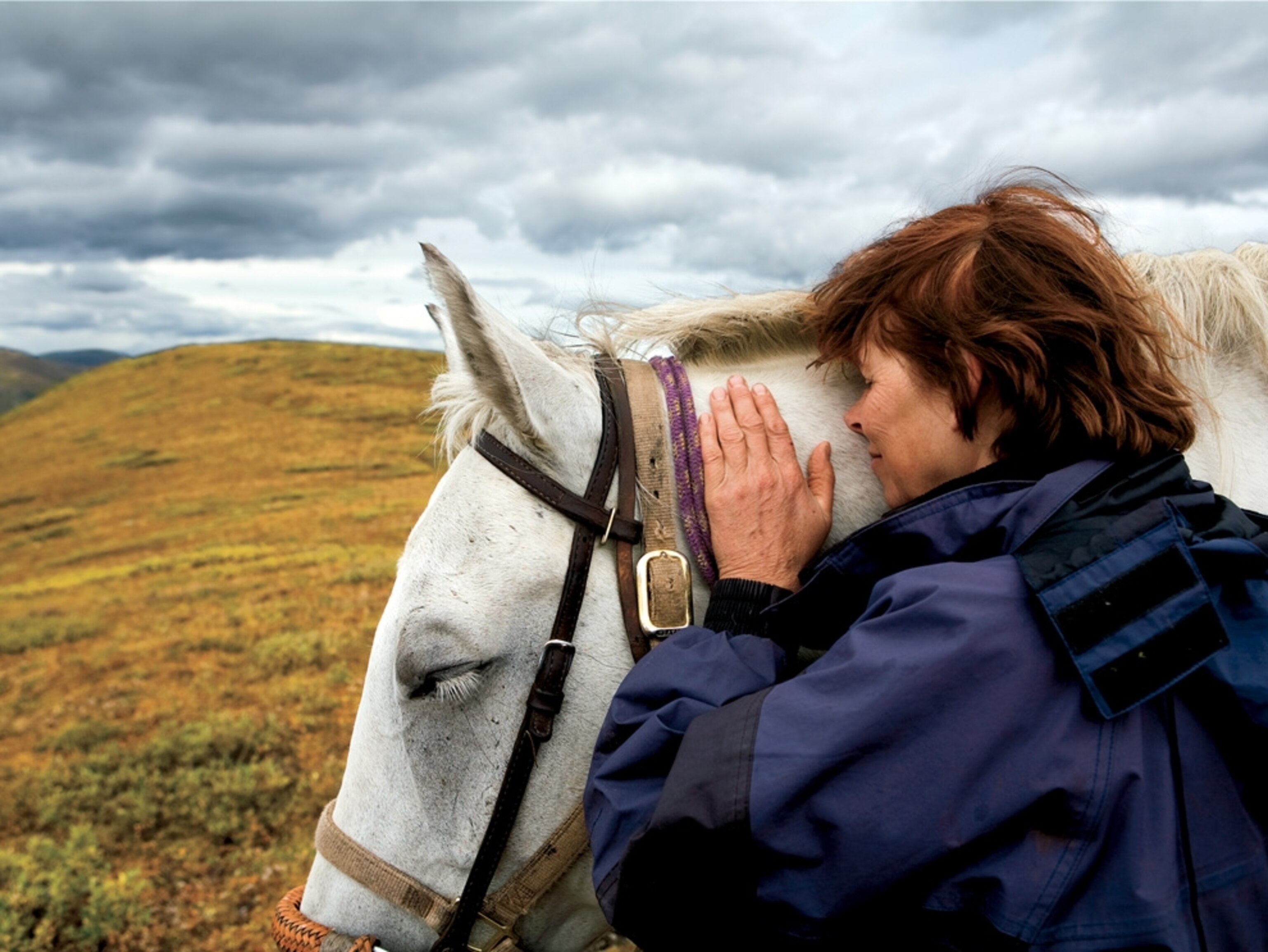
Woman and Horse, Canada
Photograph by Michael Christopher Brown, National Geographic
Capturing an intimate moment in a photograph is perhaps the greatest challenge in photography. These moments must be earned through patience, trust, and perseverance. In this quiet, lovely photograph by Michael Christopher Brown, we are completely unaware of the photographer. The moment between the woman and her horse is so simple, but so real, that we feel an instant, emotional connection.—Annie Griffiths
Photo Tip: To capture an intimate moment, the photographer must learn how to earn the trust of the subject, as well as when to “disappear” and let life unfold. The subjects must feel so comfortable that they forget there’s a camera nearby.
Get more tips from Simply Beautiful: Moment »
Enjoy more photos and buy the book Simply Beautiful Photographs » -
Cliffs of Moher, Ireland
Photograph by Jim Richardson, National Geographic
The craggy Cliffs of Moher wrap around the western coast of County Clare, providing a stunning view of the Atlantic Ocean. The rocky cliffs reach 702 feet at their highest point and stretch nearly five miles across.
Photo Tip: When your subject is of indeterminate size—a mountain, a body of water, a snowscape—add a sense of scale by including something of known size, such as a person, a car, a tree, or an animal. This helps viewers understand what they’re looking at.
Get more tips from How to Take Landscape Photos »
Buy the Ultimate Field Guide to Travel Photography »