-
Plum Tree, China
Photograph by Raymond Gehman, National Geographic
This elegant image by Raymond Gehman is a perfect example of the compositional Rule of Thirds, best understood by imagining a tic-tac-toe grid placed over the photograph. Balance within a photograph is often achieved by placing the strong elements along those grid lines, with the very strongest at the intersection of the lines. This photograph is beautiful for many reasons, but the balance created by the placement of the tree against the colors of the wall is perfection. —Annie Griffiths
Photo Tip: Placing the most important part of a picture dead center in the frame is usually not very appealing. Remember the Rule of Thirds and seek a composition that strikes a balance between the strongest element and open areas, which will usually lead to a more successful image.
Enjoy more photos and buy the book Simply Beautiful Photographs »
-
Open Air Market, India
Photograph by William Albert Allard, National Geographic
The world is a chaotic place, and a photographer uses composition to separate his chosen subject from that chaos. In this clever composition by William Albert Allard, the windowpanes isolate individual stories from a very complex scene. It is a photograph that one can return to again and again, and find something new each time. —Annie Griffiths
Photo Tip: When searching for a photograph in a complex scene, look for ways to isolate the elements that you want to stand out. Using architectural or natural elements as a frame can lead the eye and prevent the photograph from becoming a jumble of confusion.
Enjoy more photos and buy the book Simply Beautiful Photographs »
-
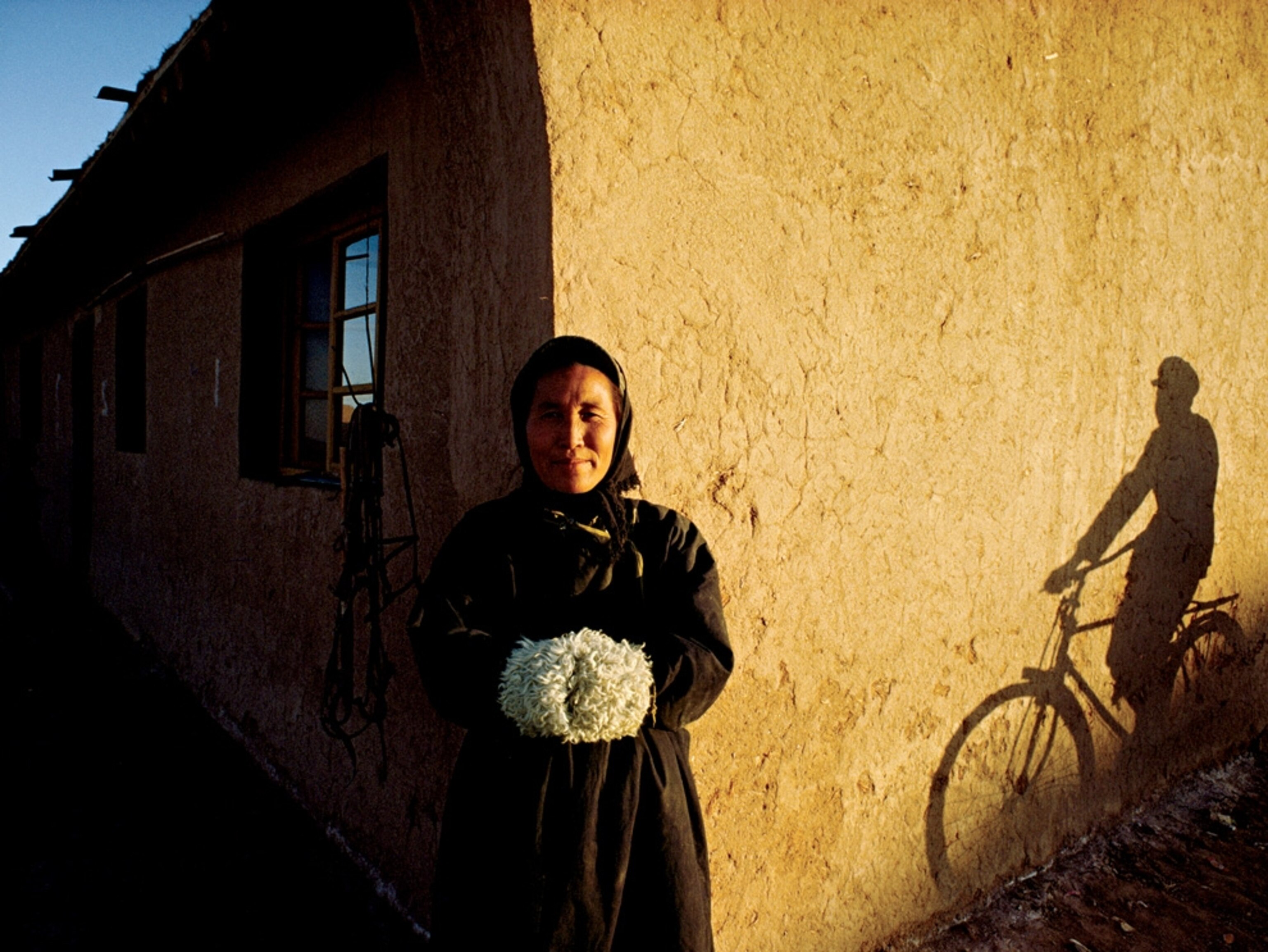
Bayan Obo People’s Commune, Mongolia
Photograph by James L. Stanfield, National Geographic
Composition is really the process of putting a frame around the elements that are important to include in a photograph. What is left out of the frame is as important as what is left in. In this wonderful portrait, photographer James L. Stanfield has perfectly balanced light and dark in his composition. The figure is halved by the light, and the rest of the frame contains perfect balance. The silhouette is balanced by the window; the triangle of sky is mirrored by a triangle of shadow on the opposite corner. Nothing detracts from this perfect composition. —Annie Griffiths
Photo Tip: When composing a photograph, do a last-second check around the edges to ensure that nothing distracting is in the frame. Never rush a portrait. Take time to compose the scene, and then work with your subject to capture the personality you want to reveal.
Enjoy more photos and buy the book Simply Beautiful Photographs »
-
Tree-Lined Driveway, Mississippi
Photograph by Sam Abell, National Geographic
This photograph by Sam Abell, which charms with its rich colors, is actually a study in geometry. The composition is symmetrical, with the road running directly down the center of the arching trees. The twin rows of trees and flowers contain a series of triangles and leading lines that draw us through the composition. —Annie Griffiths
Photo Tip: Symmetry can be dull or delightful in composition. It’s all about balance. Strong lines and colors and the placement of the horizon and open spaces can all add interest to what appears, at first glance, to be a simple, symmetrical scene.
Enjoy more photos and buy the book Simply Beautiful Photographs »
-
Garden Party, United Kingdom
Photograph by Jodi Cobb, National Geographic
Sometimes the patterns within a composition are more important than the subject matter itself. We barely notice the individuals in this photograph by Jodi Cobb because we are so drawn to the pattern of umbrellas and top hats and the occasional pop of red in the composition. —Annie Griffiths
Photo Tip: When a photographer is drawn to a pattern in a scene, it is important to be thoughtful about keeping out any element that distracts or pulls the eye away from the appeal of the pattern. One pair of unfortunate galoshes could have ruined this image!
Enjoy more photos and buy the book Simply Beautiful Photographs »
-
Tango, South America
Photograph by Pablo Corral Vega, National Geographic
Using a wide-angle lens is a good tool for creating dynamic compositions. With the main subject usually up-close, and right in front of the frame, a wide-angle perspective also allows for an intriguing background to add to the scene. This terrific photograph by Pablo Corral-Vega shows this technique perfectly. We are immediately drawn to the passion of the couple in the foreground. Then we get a second picture of a street scene in which the people seem oblivious to the intimacy of the dancers. —Annie Griffiths
Photo Tip: Don’t be shy about working very closely to your subject. Once that becomes comfortable, there are so many creative ways to work with the background. Layering the action in a photograph can lead to multiple images that are anchored by the intimacy of the main subject.
Enjoy more photos and buy the book Simply Beautiful Photographs »
-
Winter Landscape, Germany
Photograph by Norbert Rosing, National Geographic
Balance and geometry play a crucial role in successful composition. In this elegant, simple image by Norbert Rosing, we see a strong leading line—the road—as well as delicate elements that are placed in perfect geometric balance. Notice how many triangles can be found within this frame, formed by light and shadow and the placement of the subjects. —Annie Griffiths
Photo Tip: Remember that the simplest subject can be beautiful if the composition is thoughtful. The goal is to achieve geometric balance in an image by strategically placing strong elements so that they balance the more open areas of the photograph.
Enjoy more photos and buy the book Simply Beautiful Photographs »
-
Street Scene, Portugal
Photograph by W. Robert Moore, National Geographic
Sometimes the photographer recognizes a great scene and just waits for something compelling to happen in that scene. I can just imagine photographer W. Robert Moore composing this scene in his camera, then waiting for reality to present him with surprise elements. It is a stunning composition of balance and curving lines, made memorable by the serendipity of daily life. —Annie Griffiths
Photo Tip: Patience is an important virtue in photography. Choosing a scene, then waiting for something magical to happen within that composition, requires faith and determination. But the payoff is priceless.
Enjoy more photos and buy the book Simply Beautiful Photographs »
-
Georgia O’Keeffe, New Mexico
Photograph by George F. Mobley, National Geographic
This remarkable photograph by George F. Mobley is a study in perfect composition. The placement of subject and painting provide balance, but the way the photographer has positioned Ms. O’Keeffe is brilliant. Every angle of hat and hands and cane and profile add to the structure of this image—and to the genius of the artist. —Annie Griffiths
Photo Tip: When shooting a portrait, it is important to pay attention to the background and the body positioning of the subject. The goal is to have the character of the subject come through without distraction.
Enjoy more photos and buy the book Simply Beautiful Photographs »
-
Man on a Horse, Nicaragua
Photograph by Luis Marden, National Geographic
What a wonderful photograph. The mood of the image is enhanced by a series of curving lines that lead from the sweep of the horse’s tail to the arms and hats of the men, to the head of the horse and back to the tail. This repetition of form connects the three figures in a circle of somber emotion. —Annie Griffiths
Photo Tip: The eye is naturally drawn to patterns, even when they’re not obvious. When composing a scene, it is best to flow with the choreography of what is happening in front of you, and press the shutter when you sense that perfect composition. It is an instinct that often bypasses the head and comes straight from the heart.
Enjoy more photos and buy the book Simply Beautiful Photographs »
Related Features
Advertisement
-
Jane Goodall
Over the course of 50 years Jane has witnessed the lives of three generations of chimpanzees.
-
Explorer Moment
Ed Viesturs shares an early morning view from Everest.
Nat Geo Photo Workshops
Special Offers
-
National Geographic
Subscribe to National Geographic magazine and save. Print and digital editions available.