-
Sandstone Patterns
Photograph by Frans Lanting
A balance of playful yellow and passionate red, orange commands attention without overwhelming. This often flamboyant color brings to mind citrus and sunsets, fall leaves, and jack-o'-lanterns. Orange has even been found to stimulate appetite and creativity in humans.
Here, patterns etched in sandstone appear like an artist’s rendering of the Utah landscape. Dramatic sandstone formations are the main attraction at the state’s Arches National Park.
(For more pictures of the amazing colors of our world, buy the National Geographic book Life in Color.)
-
Painted Monastery
Photograph by Pete Ryan
A balance of playful yellow and passionate red, orange commands attention without overwhelming. This often flamboyant color brings to mind citrus and sunsets, fall leaves, and jack-o'-lanterns. Orange has even been found to stimulate appetite and creativity in humans.
Here, richly carved, painted wood distinguishes Paro Dzong, a fortress-monastery in Bhutan that sits above the town of Paro and serves as its religious center. A tiny Buddhist kingdom in the Himalaya, traditionally isolated Bhutan has in recent years taken steps to join the modern world.
(For more pictures of the amazing colors of our world, buy the National Geographic book Life in Color.)
-
Blue Ridge Mountains
Photograph by Amy White and Al Petteway
In winter snow and rime coat the Blue Ridge Mountains, where the rising sun striking icy branches appears to set the trees afire.
(For more pictures of the amazing colors of our world, buy the National Geographic book Life in Color.)
-
Autumn Leaves
Photograph by Raymond Gehman
Autumn leaves cling to the branches of a red maple alongside the Russell-Brasstown Scenic Highway in Chattahoochee-Oconee National Forest. Established in 1936 as the Chattahoochee National Forest, the area has over 30,000 animals, including a robust bear population.
-
Venice Carnival
Photograph by Theo Westenberger
A pigeon flies past a group of masqueraders in Piazza San Marco. Venice's Carnival celebrations date to the Middle Ages.
(For more pictures of the amazing colors of our world, buy the National Geographic book Life in Color.)
-
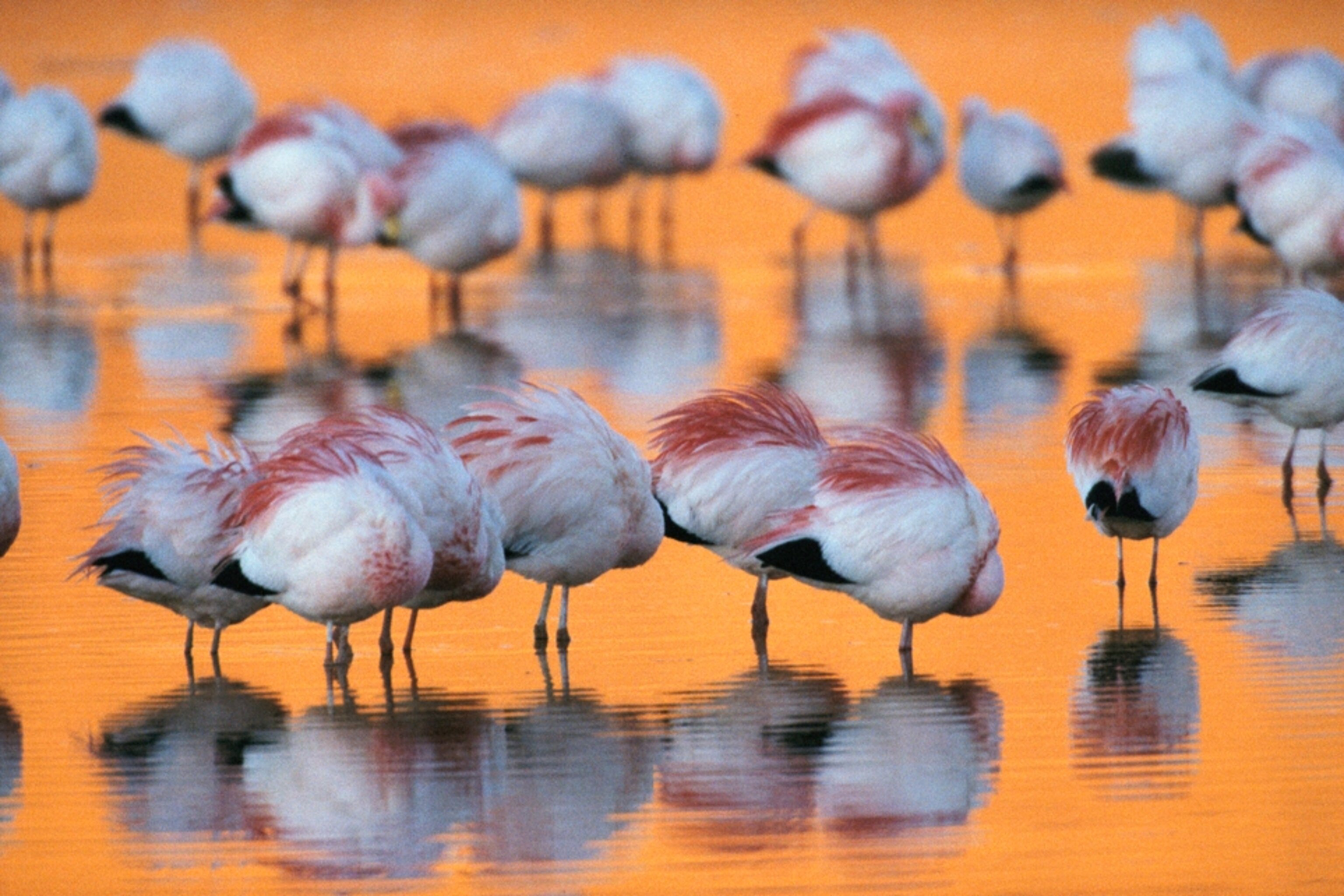
Flamingos
Photograph by Joel Sartore, National Geographic
Migratory flamingos roost in a high-altitude lake in Chile’s Atacama Desert. Water from springs, snowmelt, and scant summer rain creates such lakes in what is known as the driest place on Earth.
(For more pictures of the amazing colors of our world, buy the National Geographic book Life in Color.)
-
Setting Sun
Photograph by Michael Yamashita
A burning orange sun sets behind a fringe of pampas grass in Japan. Japan's nickname, "The Land of the Rising Sun," is derived from the Chinese ideograph meaning "place of the sun's origin."
(For more pictures of the amazing colors of our world, buy the National Geographic book Life in Color.)
-
Orange Coral
Photograph by Tim Laman
A tubastraea coral waves its wispy, orange tentacles near Sangeang Island, Indonesia. Coral reefs cover less than one percent of the ocean floor, but they support one out of every four marine creatures.
(For more pictures of the amazing colors of our world, buy the National Geographic book Life in Color.)
-
Giraffes
Photograph by Chris Johns
Three giraffes in Botswana's Okavango Delta stretch their necks above the horizon before a glowing orange sky.
(For more pictures of the amazing colors of our world, buy the National Geographic book Life in Color.)
-
Insulation Fibers
Photograph by James Amos
Molten glass is turned into insulation at the Johns-Manville Corporation in Berlin, New Jersey. The orange-hot fluid is forced through holes in a palladium sheet to form long, thin fibers.
(For more pictures of the amazing colors of our world, buy the National Geographic book Life in Color.)
-
Scorpion
Photograph by Michael Nichols
Scorpians have survived for hundreds of millions of years by being extremely adaptable. Some, like this orange-colored species in the Grand Canyon, dwell in desert climes, while others inhabit the tropics, temperate forests, and even Himalayan high peaks.
(For more pictures of the amazing colors of our world, buy the National Geographic book Life in Color.)
-
Migratory Birds
Photograph by Norbert Rosing
Birds fill an orange sky over Germany’s Wattenmeer National Park. This coastal wetland, covered by the sea at high tide, is home to some 3,200 different animals and a popular stopover for many migratory birds.
(For more pictures of the amazing colors of our world, buy the National Geographic book Life in Color.)
-
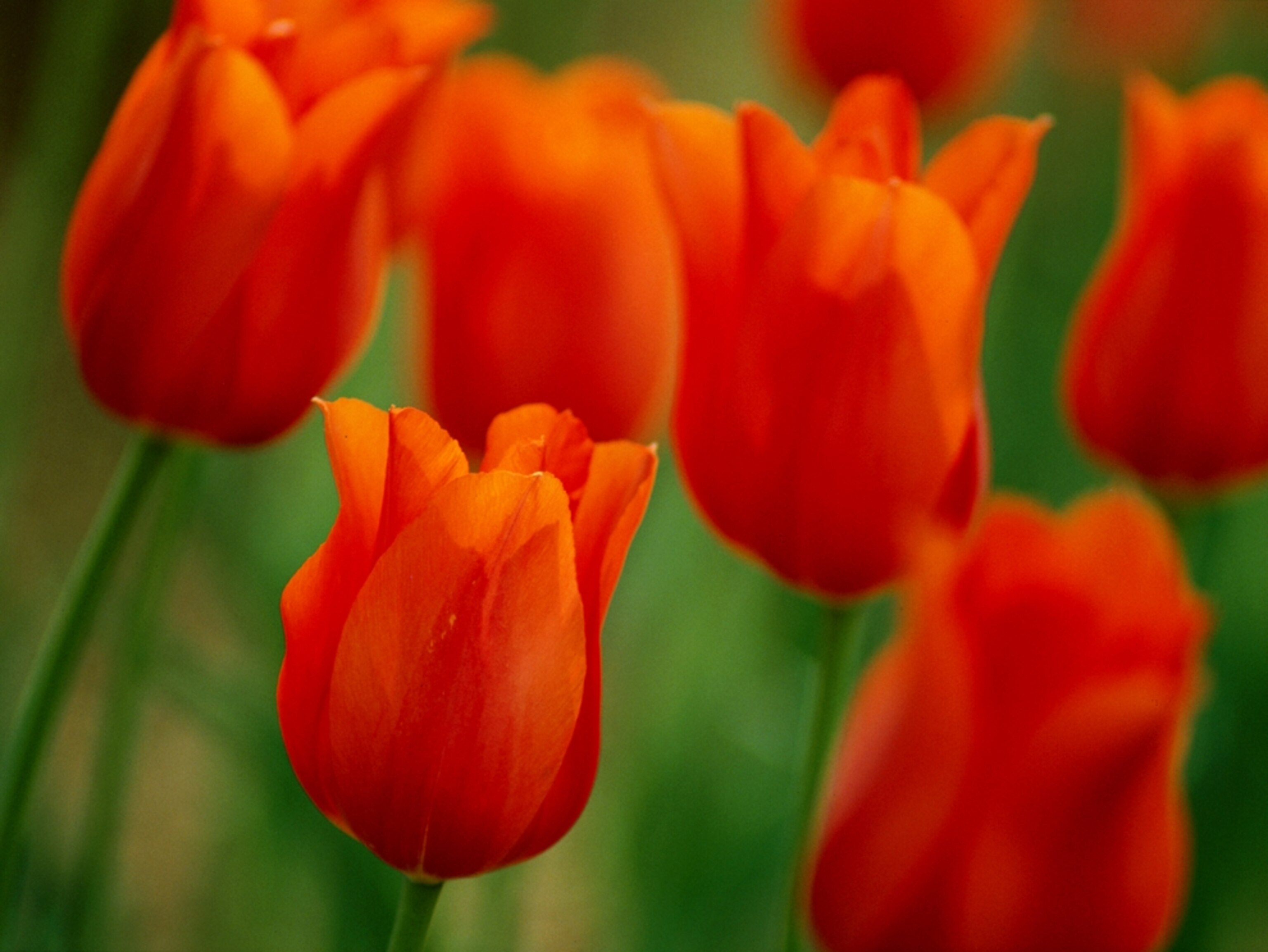
Orange Tulips
Photograph by James Blair
Vibrant tulips brighten the Samuels Bulb Garden at St. Louis's Missouri Botanical Garden. Established in 1859, the garden is an internationally recognized center for botanical research and a year-round urban oasis for flower fans.
(For more pictures of the amazing colors of our world, buy the National Geographic book Life in Color.)
-
Beehive Huts
Photograph by James Stanfield
The dusty-orange, beehive-shaped huts of Tall Mardĭkh, Syria, were built some 200 years ago by an ancient method which has since been lost. The shape and materials of these mud-brick dwellings help them remain cool in summer and warm in winter.
(For more pictures of the amazing colors of our world, buy the National Geographic book Life in Color.)
-
Cowboy Boot
Photograph by Todd Gipstein
Sunset casts a spurred boot in silhouette in Santa Fe, New Mexico. Such icons of the Old West still have a proud place in everyday New Mexican life.
(For more pictures of the amazing colors of our world, buy the National Geographic book Life in Color.)
-
See More Life in Color
Photograph by J. Baylor Roberts, National Geographic
Life in Color Galleries
Advertisement
-
Steady Hands and Fins
Photographer David Doubilet photographs stingrays, sharks, and more.
-
Survival Guide: Dodging Locusts
Swarm behaviorist Iain Couzin has a toxic reaction to a locust at the same time his team runs out of food.
Special Offers
-
National Geographic
Subscribe to National Geographic magazine and save. Print and digital editions available.