-
Coastline of Cornwall
Photograph and text by Catherine Karnow
Best known as the Prince of Wales—and heir apparent to the British throne—Great Britain's Prince Charles holds many titles. As the Duke of Cornwall he controls the Duchy of Cornwall, a royal territory of some 135,000 acres (54,500 hectares) in 23 counties.
The prince owns almost the entire coastline of Cornwall—specifically the area between high tide and low tide marks—seen here from historic Tintagel, the site of legendary King Arthur's castle. According to the land steward of that holding, for Prince Charles "it is a sloppy, emotional attachment, as the land has been in the duchy possession since the beginning." The only income the duchy gets from this coastline is from cable and wireless companies, which pay "landing fees" for their cables coming in from the east coast of the U.S.
-
Golden Yew Hedges, Gloucestershire
Photograph and text by Catherine Karnow
At Highgrove, Prince Charles's home in Gloucestershire, gardeners clip golden yew hedges exactly as the prince specifies. The prince bought the house in 1980; he fell in love with the grand cedar of Lebanon tree, which is sadly dying now. The entirely organic garden at Highgrove is his pride and joy and is considered one of the great gardens in England.
-
Prince Charles and Architect Craig Hamilton
Photograph and text by Catherine Karnow
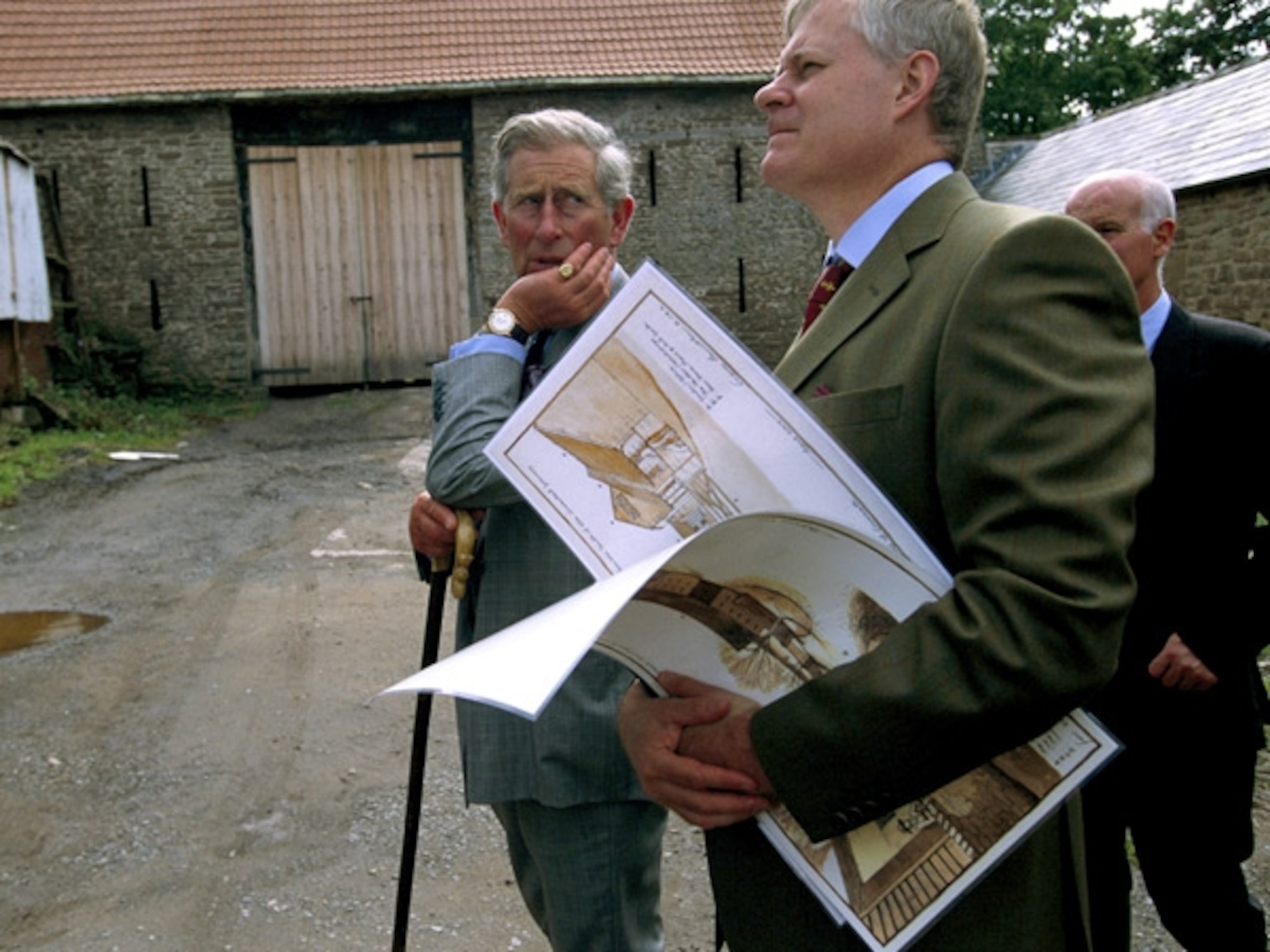
Trailed by members of his staff, Prince Charles talks with architect Craig Hamilton about renovating historic structures on a Herefordshire estate acquired by the Duchy of Cornwall in 2000.
-
Poppies at Duchy Home Farm
Photograph and text by Catherine Karnow
At Duchy Home Farm, poppies grow wild in a field of old variety wheat. The poppies are an indication of the field being organic—they haven't been eradicated by chemical weed killers. This wheat is used in Duchy Originals biscuits, the prince's own brand of organic gourmet food products such as conserves, beverages, and smoked meats.
-
Organic Farm, Gloucestershire
Photograph and text by Catherine Karnow
On Duchy Home Farm, Prince Charles's all-organic farm in Gloucestershire, the last few weeds in the carrot beds must be extracted by hand, since no weed killers are used on the farm. Workers use this odd contraption called a "bedweeder."
-
Prize-Winning Chickens, Highgrove
Photograph and text by Catherine Karnow
At Highgrove, Prince Charles's estate in Gloucestershire, the prince's award-winning chickens have their prize ribbons displayed on the henhouse door. The chickens win awards for their eggs, which the prince, who is patron of the Poultry Association, displays at county shows. The prince often feeds the chickens himself, first thing in the morning, in his dressing gown.
-
Gloucestershire Sheep
Photograph and text by Catherine Karnow
On Prince Charles's own farm, Duchy Home Farm, which is adjacent to his estate Highgrove in Gloucestershire, James Pritchard helps take care of the prince's sheep, a native Welsh breed called Lleyn. The prince loves his sheep and enjoys showing them at county fairs. They are also an essential part of a mixed farming system on organic farms.
-
Organic Squash
Photograph and text by Catherine Karnow
At Prince Charles's Duchy Home Farm, organic squash gets a last watering at the end of a summer afternoon.
-
The Meadow at Highgrove
Photograph and text by Catherine Karnow
At Highgrove, Prince Charles's estate in Gloucestershire, Sara Champier-Lowe, the prince's florist, picks flowers for the house. The gardens at Highgrove are the prince's pride and joy. Some are beautifully manicured, while others, like the meadow, are planted with weeds for a wild, untamed look.
-
Moors of Dartmoor
Photograph and text by Catherine Karnow
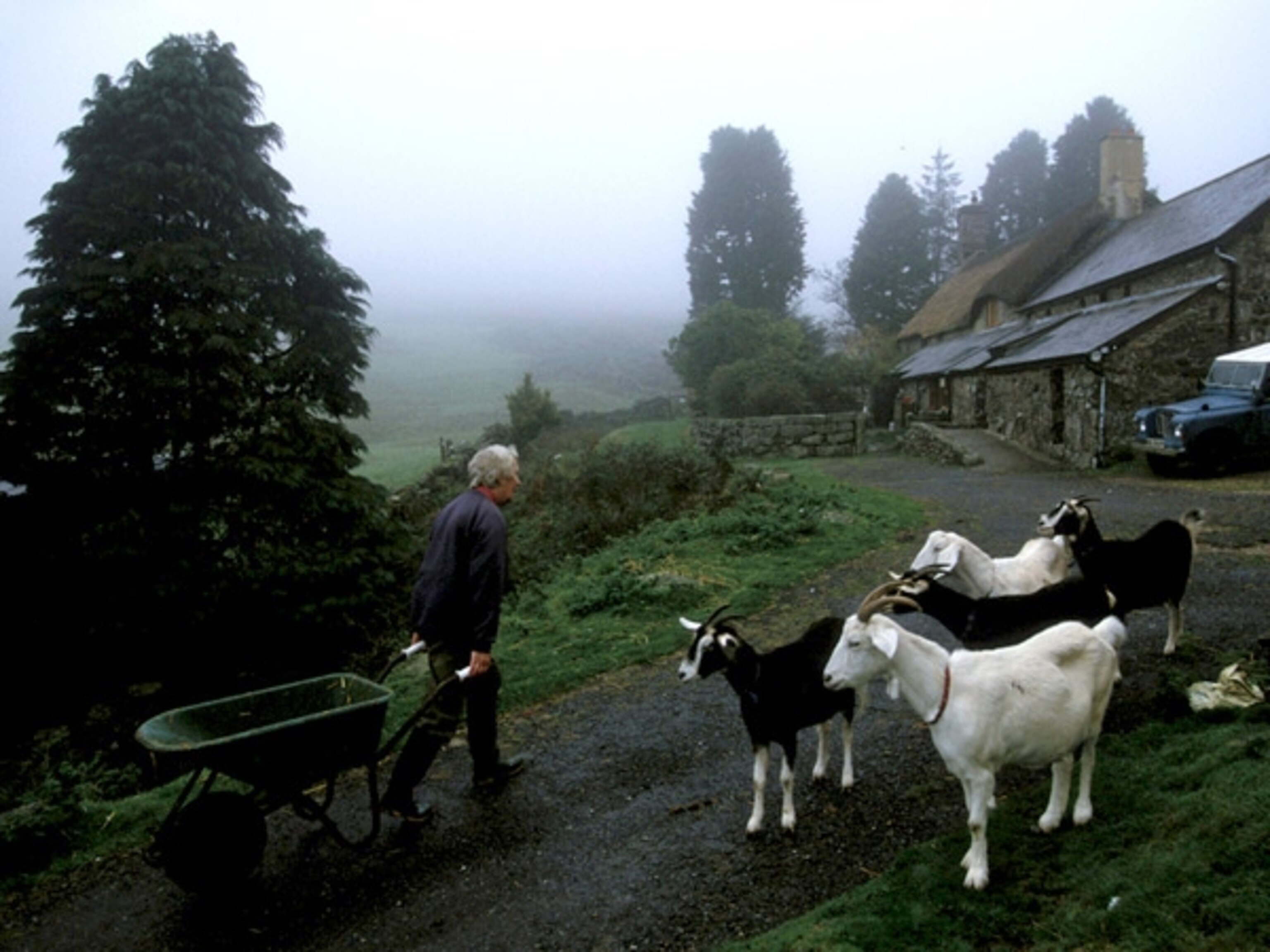
Half of all the lands belonging to the Duchy of Cornwall are the isolated and beautiful moors of Dartmoor. Nearly impossible to farm, most, like Headland Warren Farm, are failing and must find other ways to bring in an income, such as renting out holiday cottages during the summer.
-
Tenant at Headland Warren Farm
Photograph and text by Catherine Karnow
Diana Wynn, who has been a tenant at Headland Warren farm for 18 years, makes a meager income from renting out her renovated barn as a holiday cottage. She is an unhappy tenant; the Duchy loaned her 30,000 pounds to renovate the barn, then raised her rent—citing that she now had an increased income—and continues to charge interest on the loan.
-
Riddon Farm on Dartmoor
Photograph and text by Catherine Karnow
Small family farms are struggling on Dartmoor. Riddon Farm is the smallest on Dartmoor and one of the oldest. Sheila and Margaret Norrish live together on the farm where they grew up; Sheila was born right in the farmhouse. "Farming now," Margaret says, "is no fun anymore. It's just hard work." Their 70 acres (30 hectares) is not enough to survive on. Without the extra field they rent, they wouldn't be able to manage.
-
Dartmoor Ponies
Photograph and text by Catherine Karnow
Ivan Mortimore of Higher Shapley farm, on the northern edge of Dartmoor, rounds up his Dartmoor ponies during the annual pony "drift." Fifty percent of the Duchy of Cornwall is made up of the isolated rugged lands of Dartmoor. Small family farms are struggling all over the U.K., and Duchy farms on Dartmoor are in especially bad shape.
-
Rock, North Cornwall
Photograph and text by Catherine Karnow
At Rock, an upscale holiday beach town in North Cornwall, Louisa Haggerty keeps warm after a swim in the Camel River. The Duchy owns the river bottom of various estuaries in Cornwall and gets income from the boat moorings and ferry boat fees.
-
Britannia Royal Naval College
Photograph and text by Catherine Karnow
Officers training at Dartmouth's Britannia Royal Naval College race down an 85-yard-long (78-meter-long) track, pulling a 900-pound (410-kilogram) cannon, in a field gun competition run every year since 1905. Prince Charles has a strong relationship with the college: He trained here as a young Royal Navy officer and as Duke of Cornwall he controls anchoring rights for college vessels in the nearby River Dart.
-
Potting Shed, Isles of Scilly
Photograph and text by Catherine Karnow
The shortage of housing is a serious issue on the Isles of Scilly. Many people like Chris Charlton, the St. Martin ferryboat operator, don't have a real place to live. Charlton lives in this potting shed. Prince Charles is reluctant to build new houses and prefers to renovate existing buildings to turn them into fancy holiday cottages, instead of providing housing for locals.
-
Prince Charles at Herefordshire
Photograph and text by Catherine Karnow
At his newest estate in Herefordshire, Prince Charles reviews plans with architect Craig Hamilton for renovating barns for living and working spaces. The prince, impatient that the renovations are going slowly, is being told that high-quality materials and labor take time and money. On all of his lands, Prince Charles oversees every element of workmanship and insists every detail be tasteful and authentic.
-
Prince Charles and Tenants
Photograph and text by Catherine Karnow
On a tour of his newest estate in Herefordshire, Prince Charles visits tenants Garth Bradbury and Emma McCleary at the back door of their house. The prince likes leaseholders like Bradbury and McCleary: young, active, business-minded, and willing to repair, mend, and improve the property. Those who make and pay for their own repairs pay a lower rent.
-
Apples for Cider
Photograph and text by Catherine Karnow
Farmer Andy Atkinson is a model tenant. On West North Farm in Duloe, Cornwall, he switched from dairy cows to apple cider. He wasn't making money from dairy, but rather than let his farm fail, he planted apple trees and now sells boutique cider.
-
Child and Boatman, North Cornwall
Photograph and text by Catherine Karnow
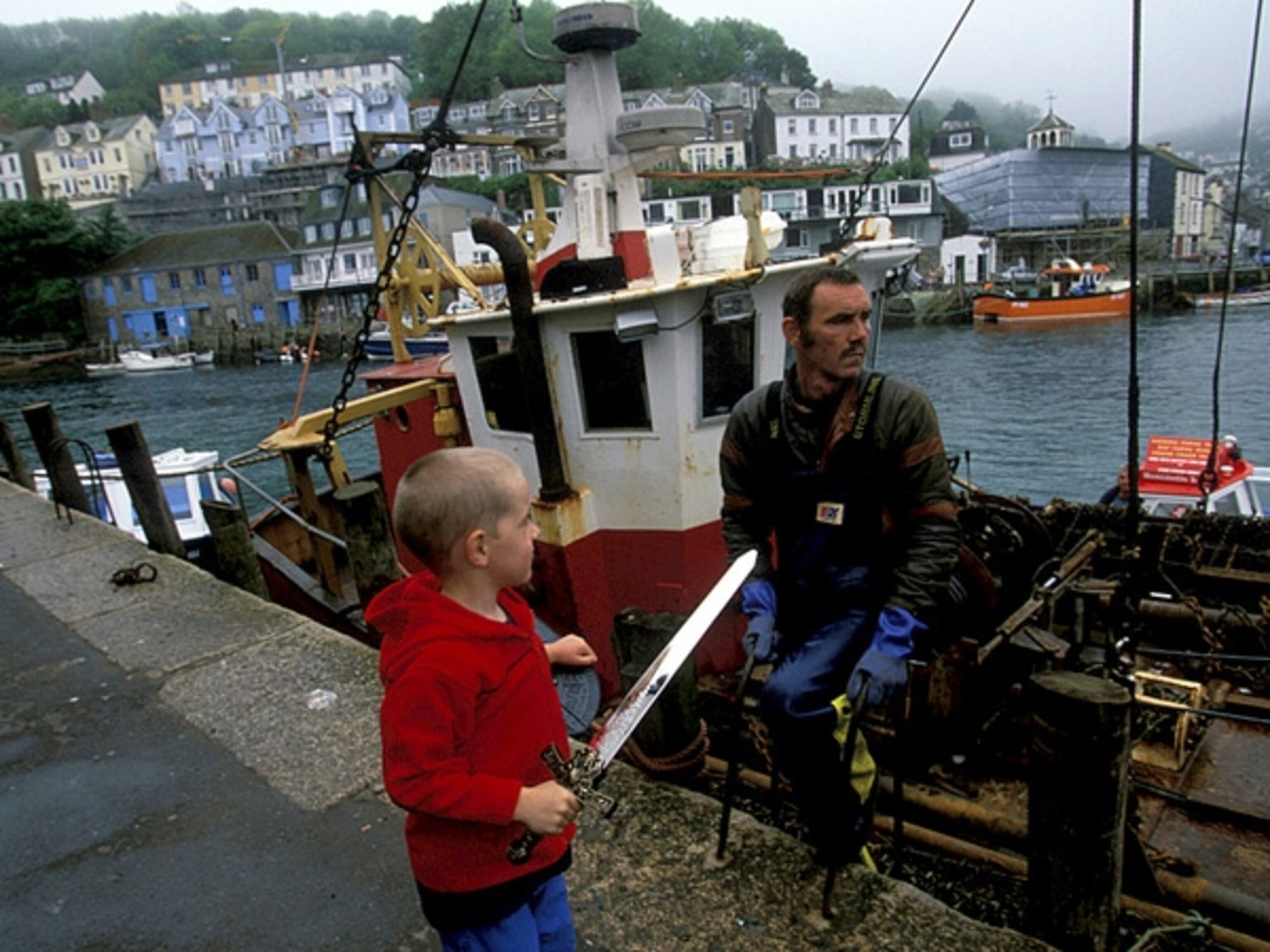
Jake Story playfully draws his sword on an unsuspecting boatman in West Looe in North Cornwall. The Duchy of Cornwall owns the river bottom of various estuaries in Cornwall. Mooring fees from boats and ferry fees make up part of Prince Charles's income.
-
View of Poundbury
Photograph and text by Catherine Karnow
Prince Charles's vision of a utopian town—a firm rejection of everything suburban—Poundbury is designed to look old. Nothing is unsightly. There are no visible telephone wires, electric cables, or street signs. Roads curve to slow traffic. No two houses are alike, and rooftops are at varying heights for visual interest. The prince considers Poundbury his legacy.
-
Poundbury Residents
Photograph and text by Catherine Karnow
Roger and Jill Parmentor are happy inhabitants of Poundbury, Prince Charles's experimental village in Dorchestershire. They don't mind the rules—residents must sign a covenant agreeing to pages of strict rules regarding paint colors, potted plants, window treatments, and so on. Inhabitants are not allowed to put up a satellite dish or park a boat or camper outside their houses.
Popular in Photography
Advertisement
-
Explorer Moment: Ray of Hope
Biologist Andrea Marshall leads her team in discovering new and conserving known manta ray species.
-
Sylvia Earle on Women in Science
Sylvia Earle reflects on her scientific career and on gender obstacles she faced along the way.
Nat Geo Photo Workshops
Special Offers
-
National Geographic
Subscribe to National Geographic magazine and save. Print and digital editions available.