-
Aurora, Yukon
Photograph by Paul Nicklen
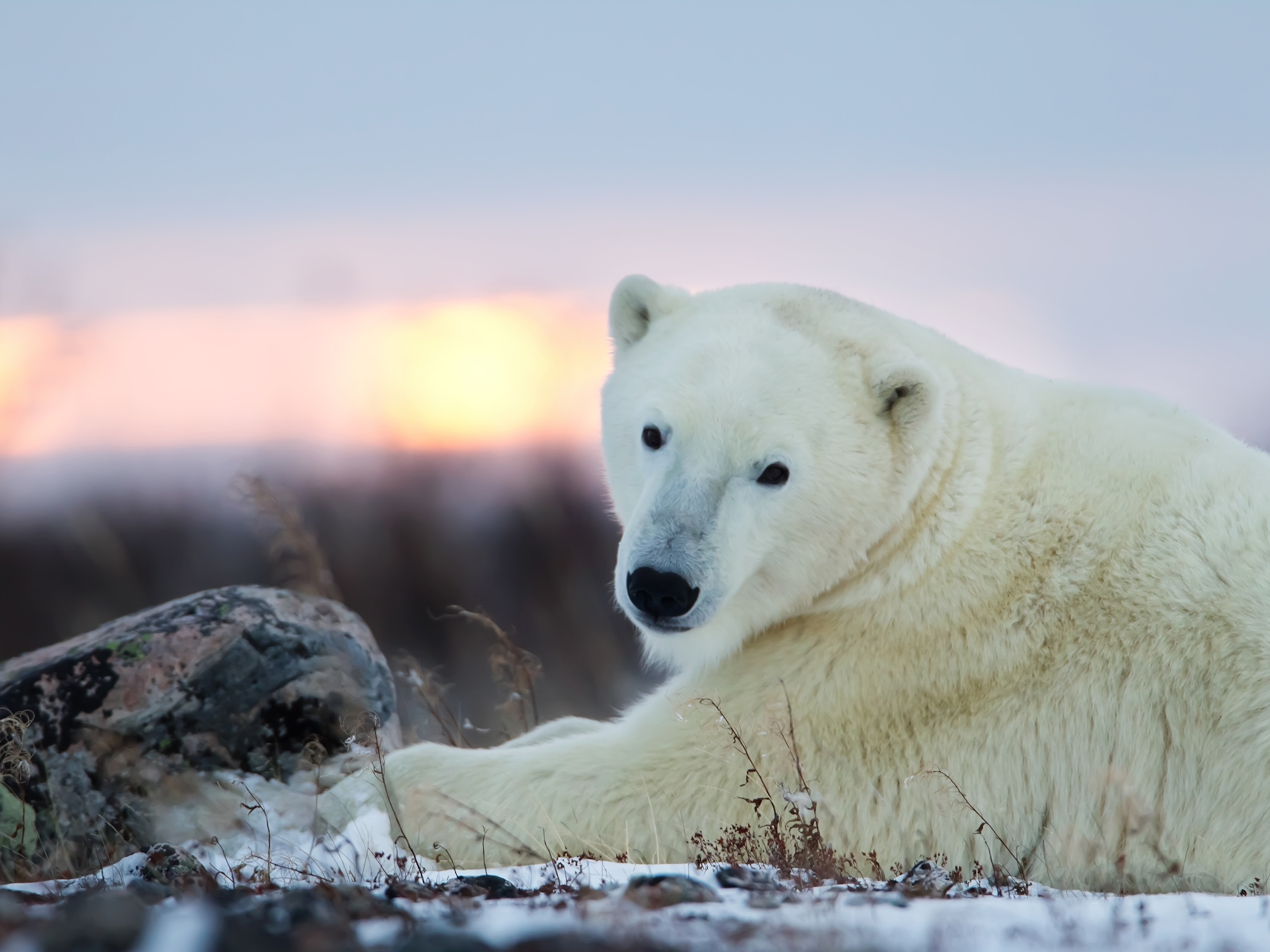
An aurora adds intense color to the skies above Canada's Yukon. Hundreds of thousands of tourists make summer pilgrimages to the Arctic frontier, where they find glaciated peaks, untouched wilderness, scenic splendors, and abundant wildflowers and wildlife.
Photographer Paul Nicklen has spent two decades capturing images of the Arctic and Antarctica, a "remote, raw, unforgiving, beautiful, and yet extremely fragile world."
-
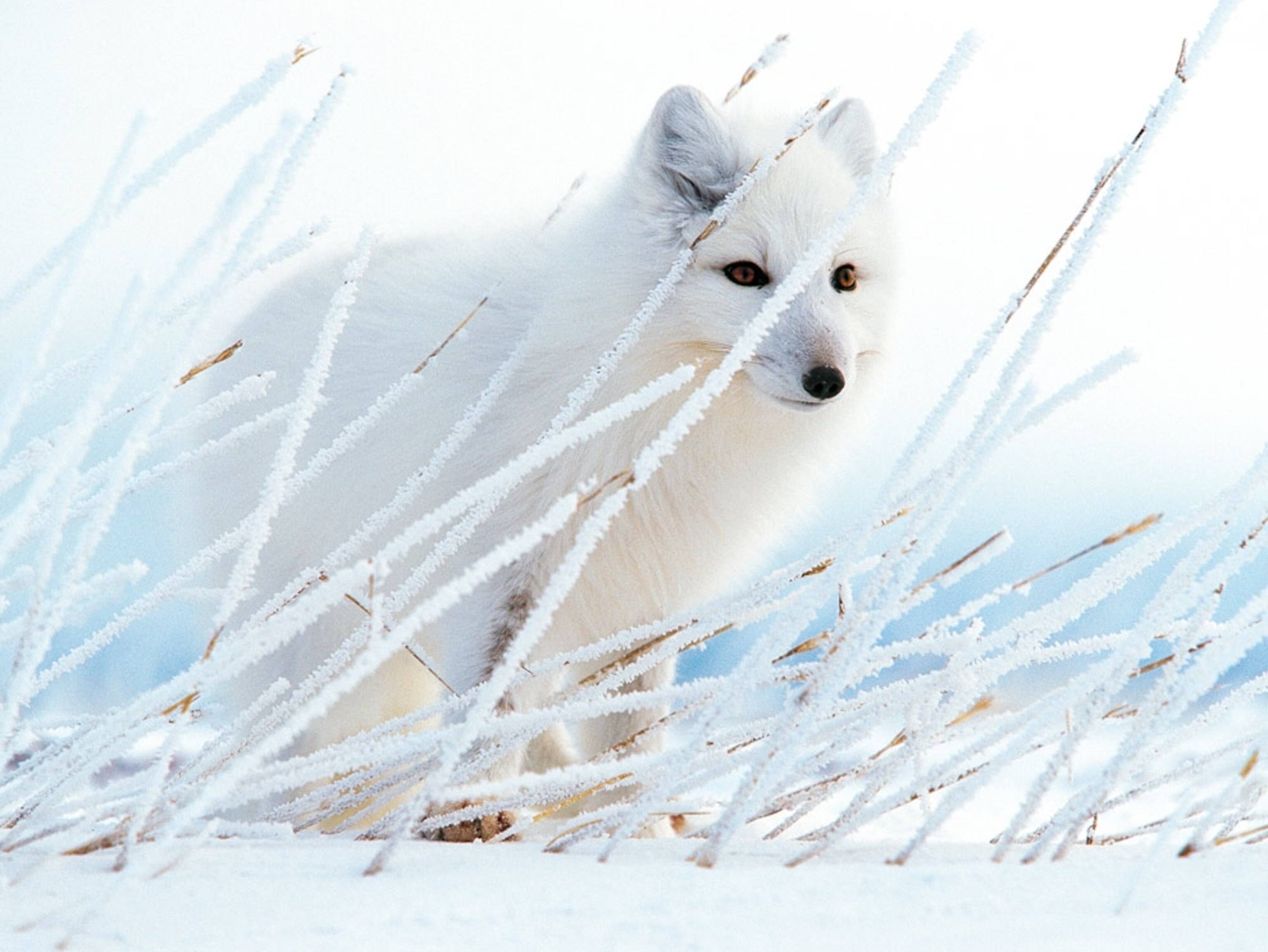
Arctic Fox, Churchill, Canada
Photograph by Paul Nicklen
Concealed by rye grass covered with hoar frost, an arctic fox listens for mice under the winter snow. When the season changes, the fox's coat turns as well, adopting a brown or gray appearance that provides cover among the summer tundra's rocks and plants.
-
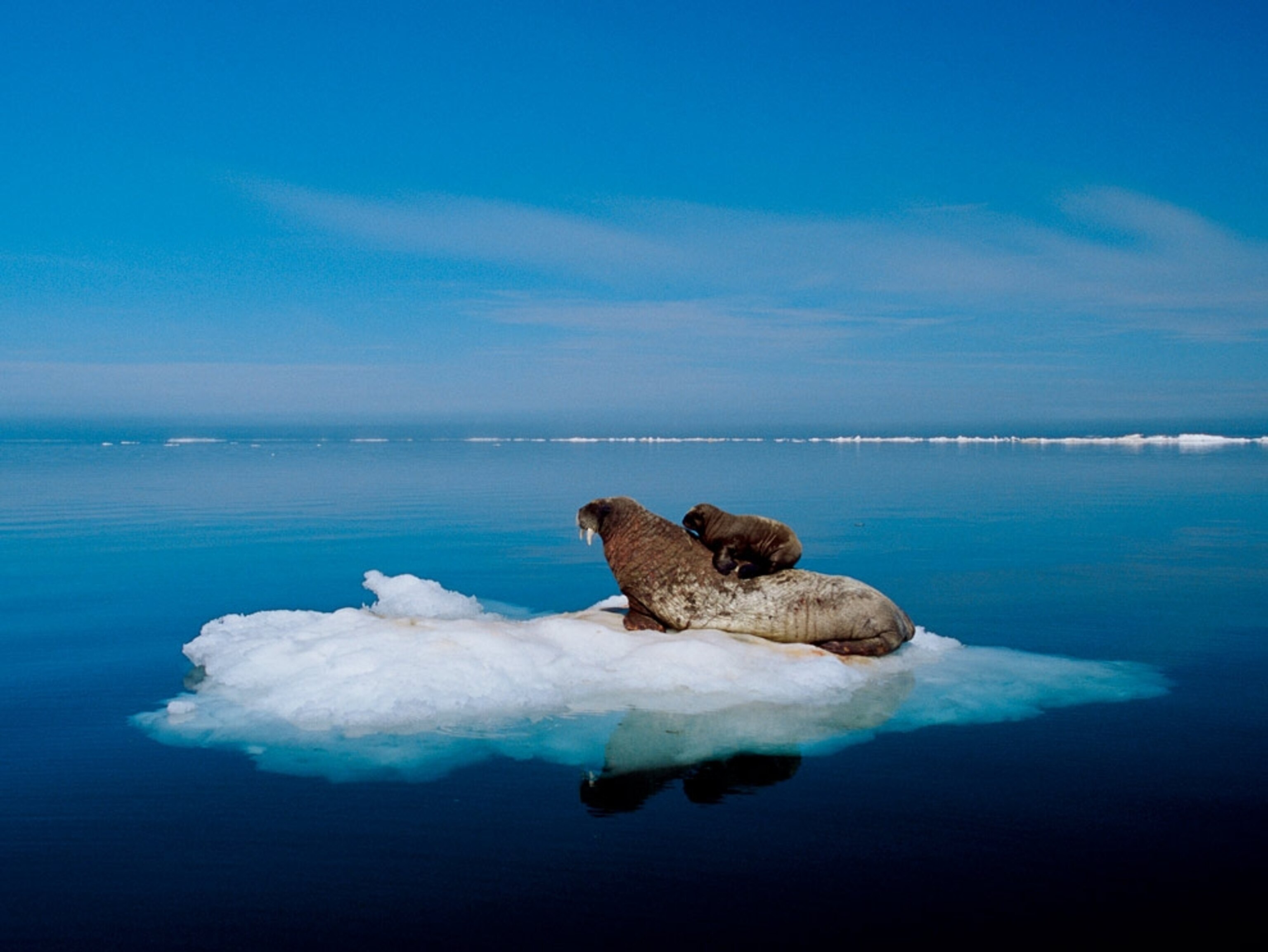
Walrus and Calf, Foxe Basin
Photograph by Paul Nicklen
A walrus and her calf rest on a piece of multiyear ice in Foxe Basin, Canada. The floating ice keeps them perched over favorite feeding grounds—clam beds—and allows the mother to whisk her calf to safety in the water should a polar bear appear.
-
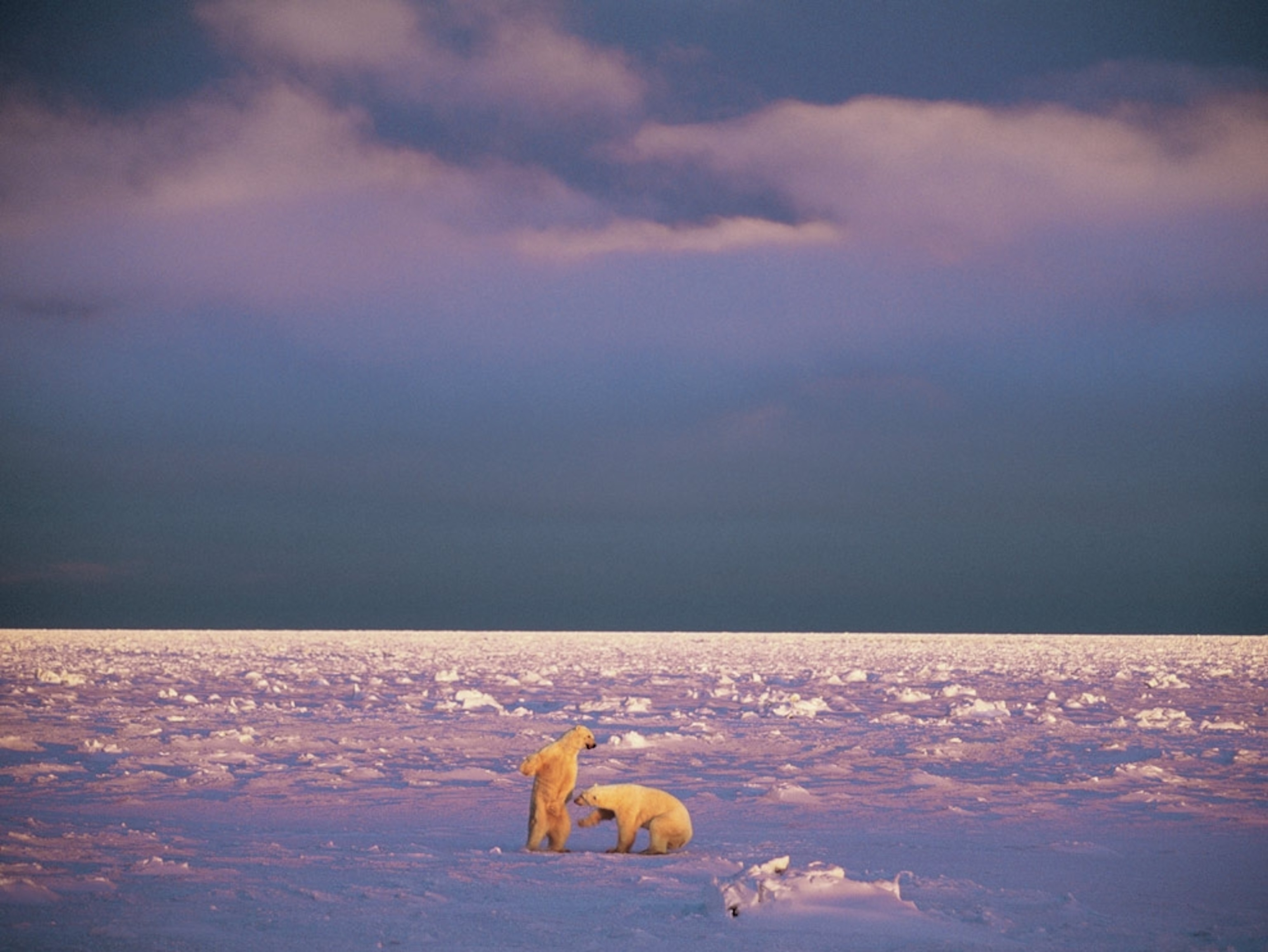
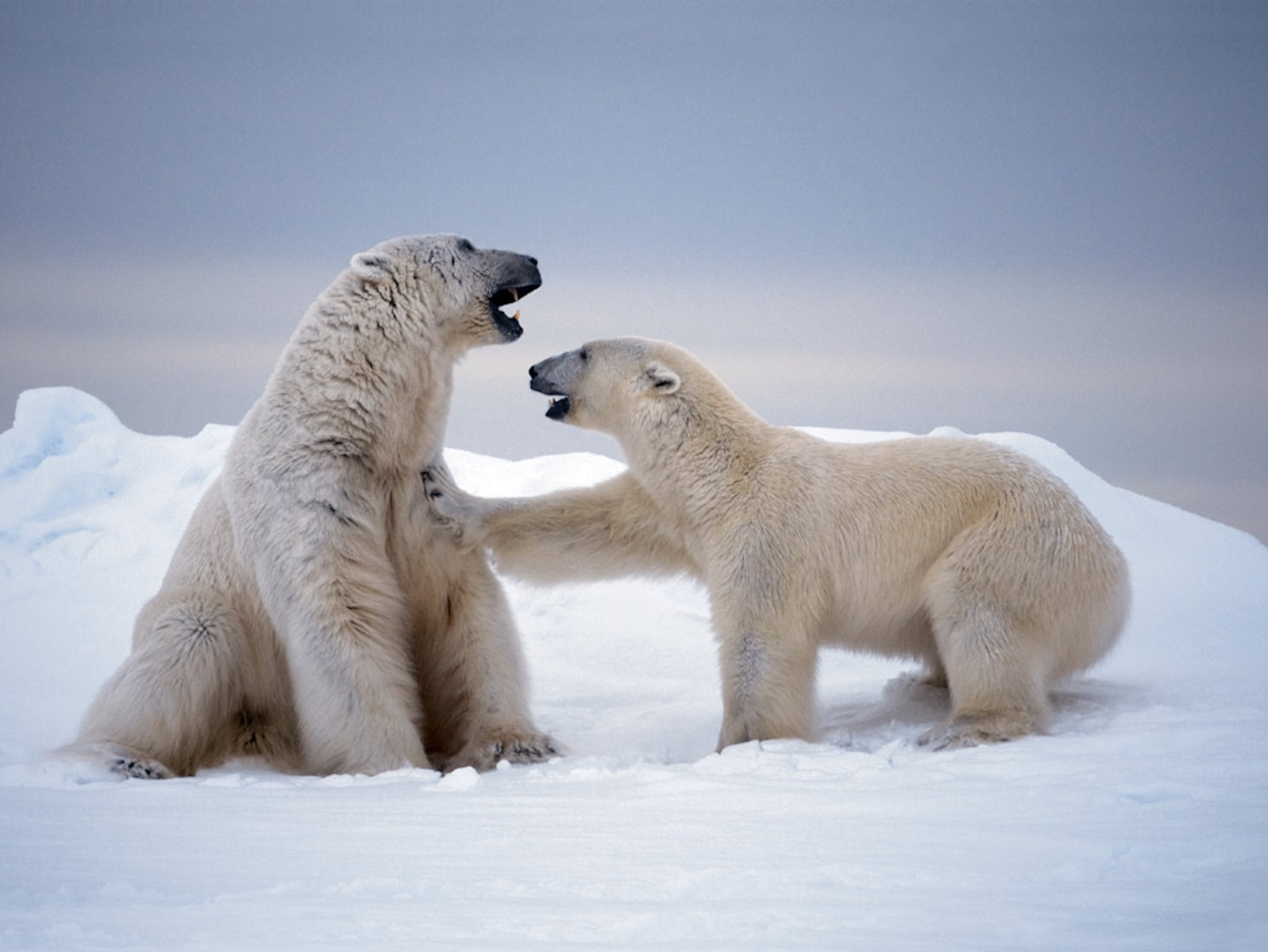
Polar Bears, Svalbard
Photograph by Paul Nicklen
Young male polar bears spar under the low light of winter in Svalbard, a cluster of islands halfway between Norway and the North Pole. Polar bears thrive here—roughly half the estimated 3,000 bears in the Berents Sea population raise their young on the archipelago's isolated islands.
-
Leopard Seal, Anvers Island
Photograph by Paul Nicklen
Propelled by curiosity and powerful flippers, a leopard seal patrols a penguin rookery near Anvers Island, Antarctica. Solitary as adults, leopard seals roam so widely in the pack ice that little is known of their biology or even their numbers. Estimates range from 200,000 to 400,000.
-
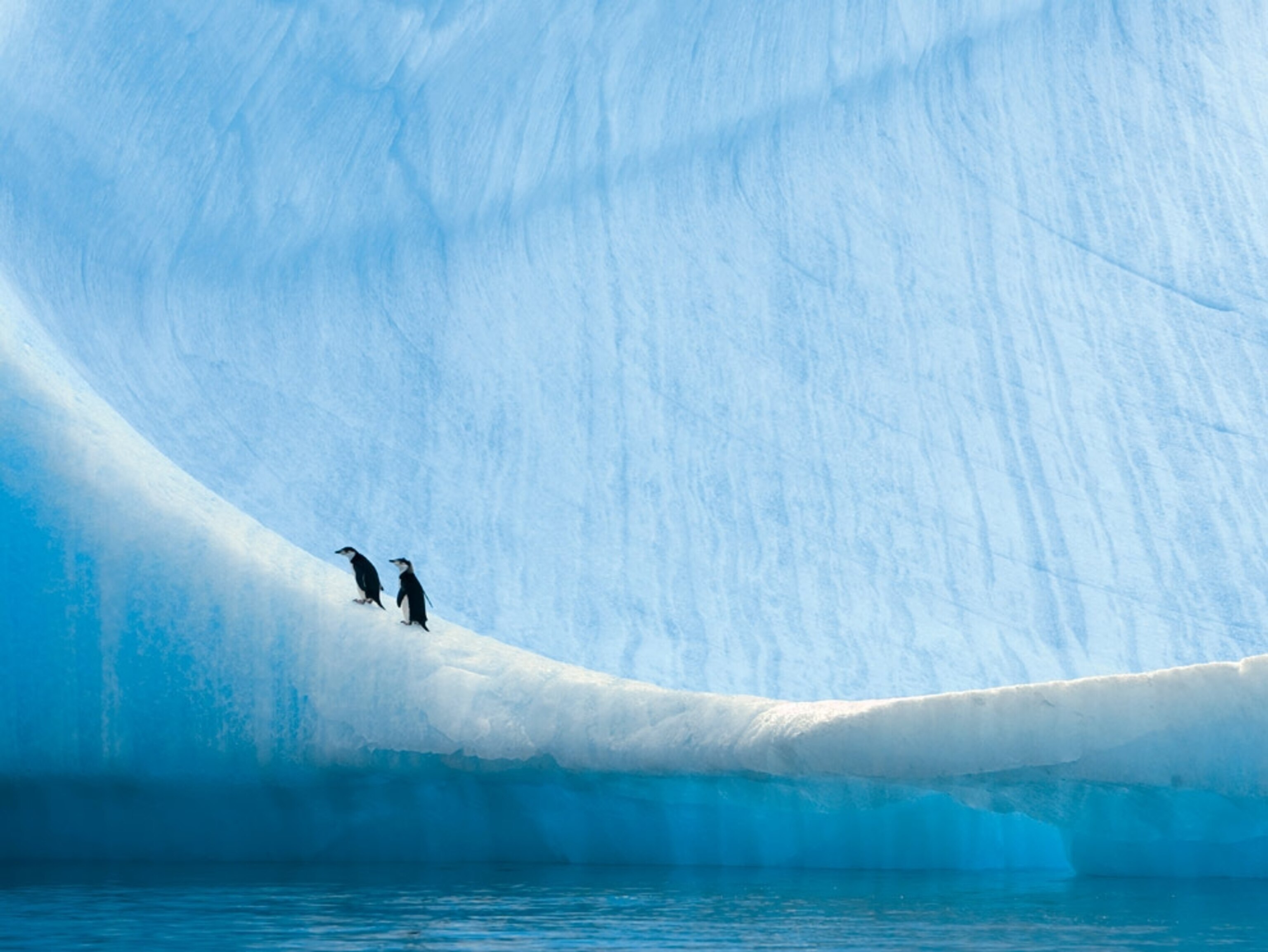
Chinstrap Penguins, Anvers Island
Photograph by Paul Nicklen
Young chinstrap penguins rest on an iceberg near Anvers Island, Antarctica. These penguins, which rely less on sea ice than other species do for their survival, have thrived as climate change has warmed the ocean around Antarctica.
-
Gentoo Penguins, Anvers Island
Photograph by Paul Nicklen
Young gentoo penguins take a cautionary first dive into an Antarctic sea. They have good reason to be wary of the predators that lurk beneath—penguins compose a significant part of the leopard seal diet, and the younger birds are particularly vulnerable.
-
Narwhals, Admiralty Inlet
Photograph by Paul Nicklen
Male narwhals rest in Canada's Admiralty Inlet. In spring, as the ice pack recedes, narwhals push into cracks and holes as they migrate. Their compact size and lack of dorsal fins aid travel beneath the ice. The annual migration also brings them within range of human hunters.
-
Ivory Gull, Hornsund
Photograph by Paul Nicklen
An ivory gull lands on ice in Hornsund, a fjord on Spitsbergen, the largest of Svalbard's islands. Glacial ice covers more than half the terrain of this archipelago, which lies 400 miles (640 kilometers) north of the Norwegian mainland.
-
Walrus, Svalbard
Photograph by Paul Nicklen
Both male and female walruses have tusks—actually canine teeth—used to haul their bodies out of the ice and break breathing holes into ice from below. Bulls also use their tusks to maintain territory and protect their harems.
-
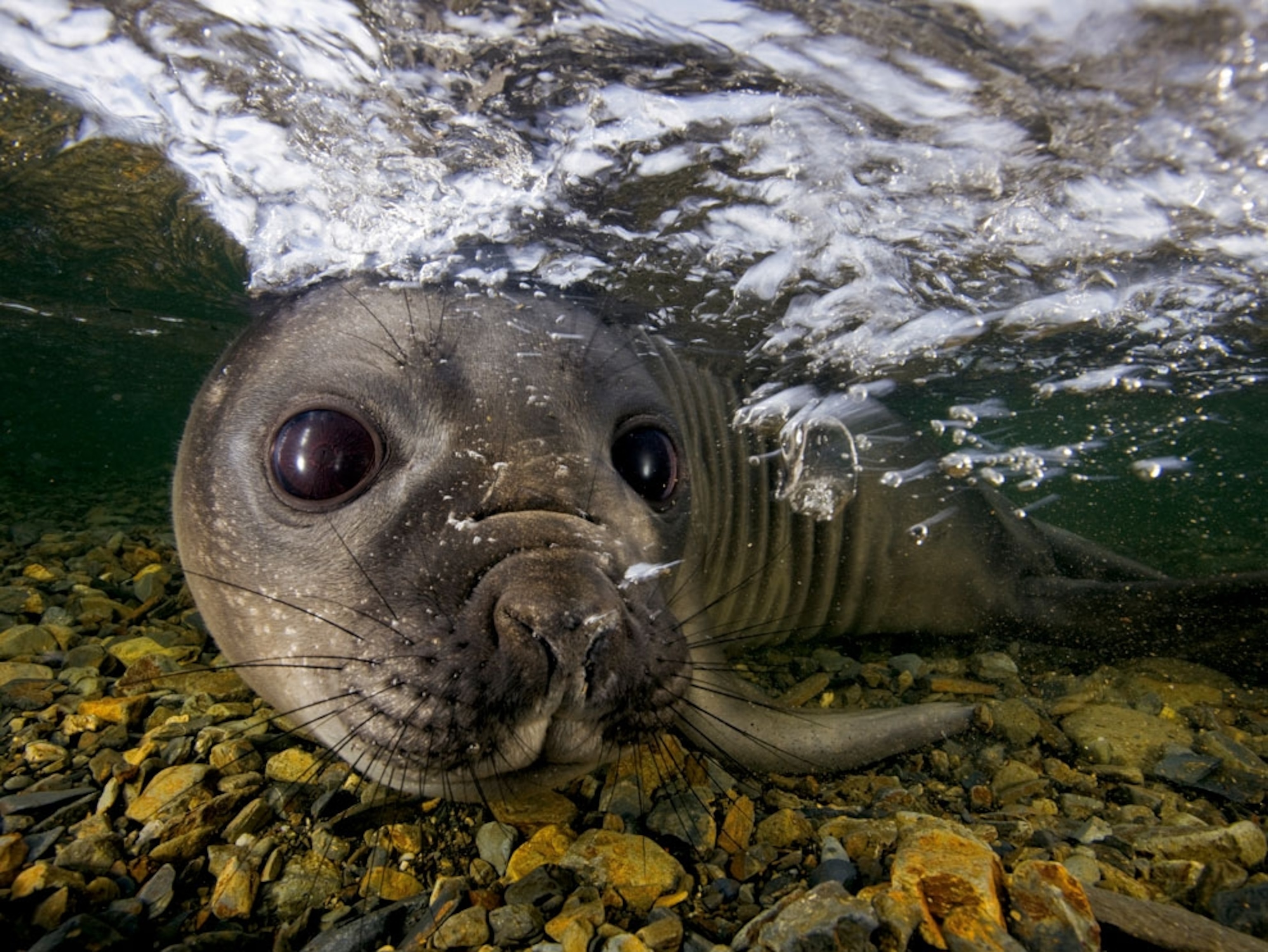
Elephant Seal Pup, South Georgia
Photograph by Paul Nicklen
An elephant seal pup plays in a freshwater stream on South Georgia, a remote British outpost in the far South Atlantic. Hundreds of thousands of southern elephant seals come to the island each summer to breed and to rear their young.
-
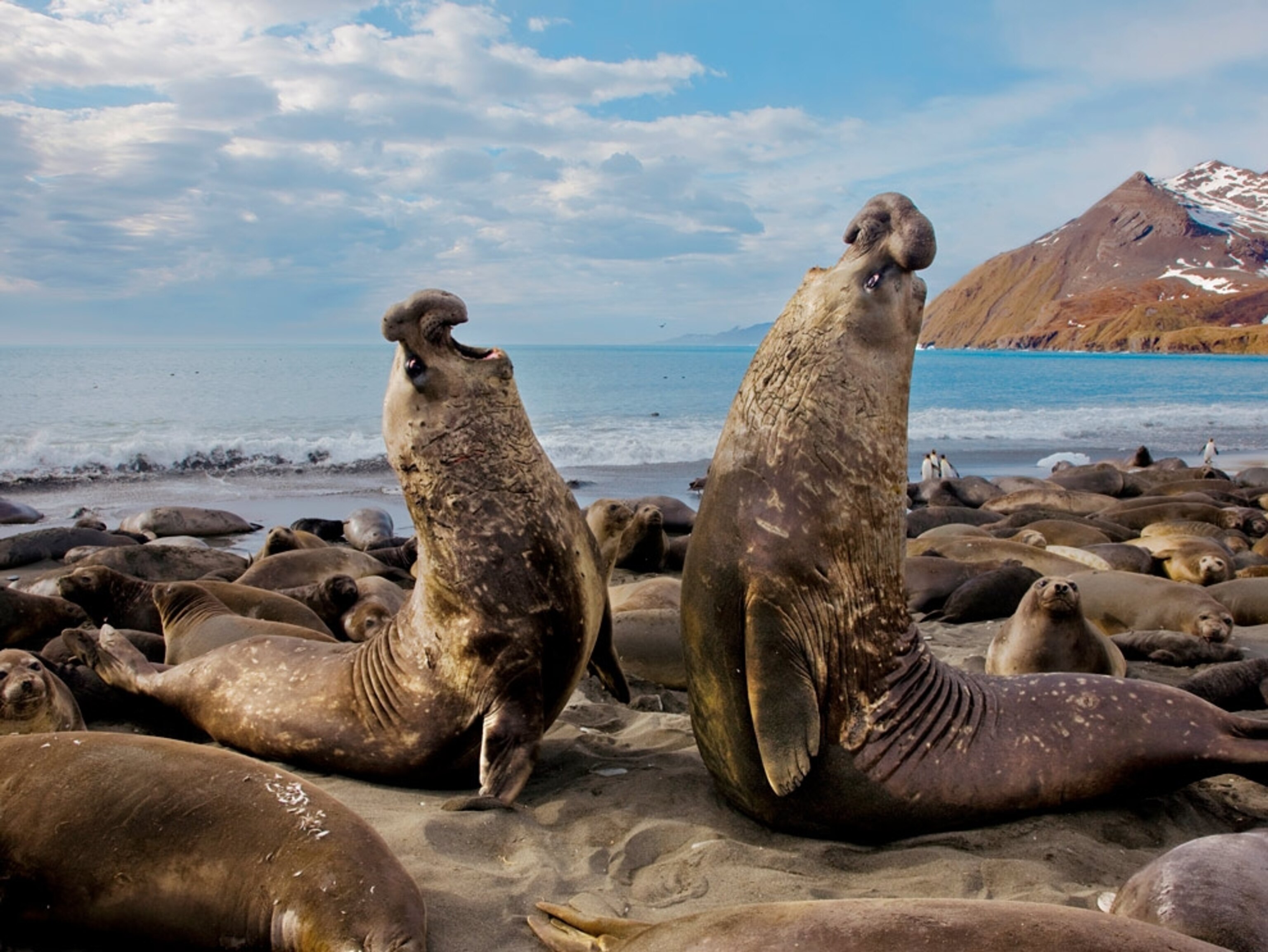
Elephant Seal Bulls, St. Andrews Bay
Photograph by Paul Nicklen
During breeding season, South Georgia's beaches become battlegrounds as big elephant seal bulls engage in bloody duels for dominance. The largest of all seals, males can be over 20 feet (6 meters) long and weigh up to 8,800 pounds (4,000 kilograms).
-
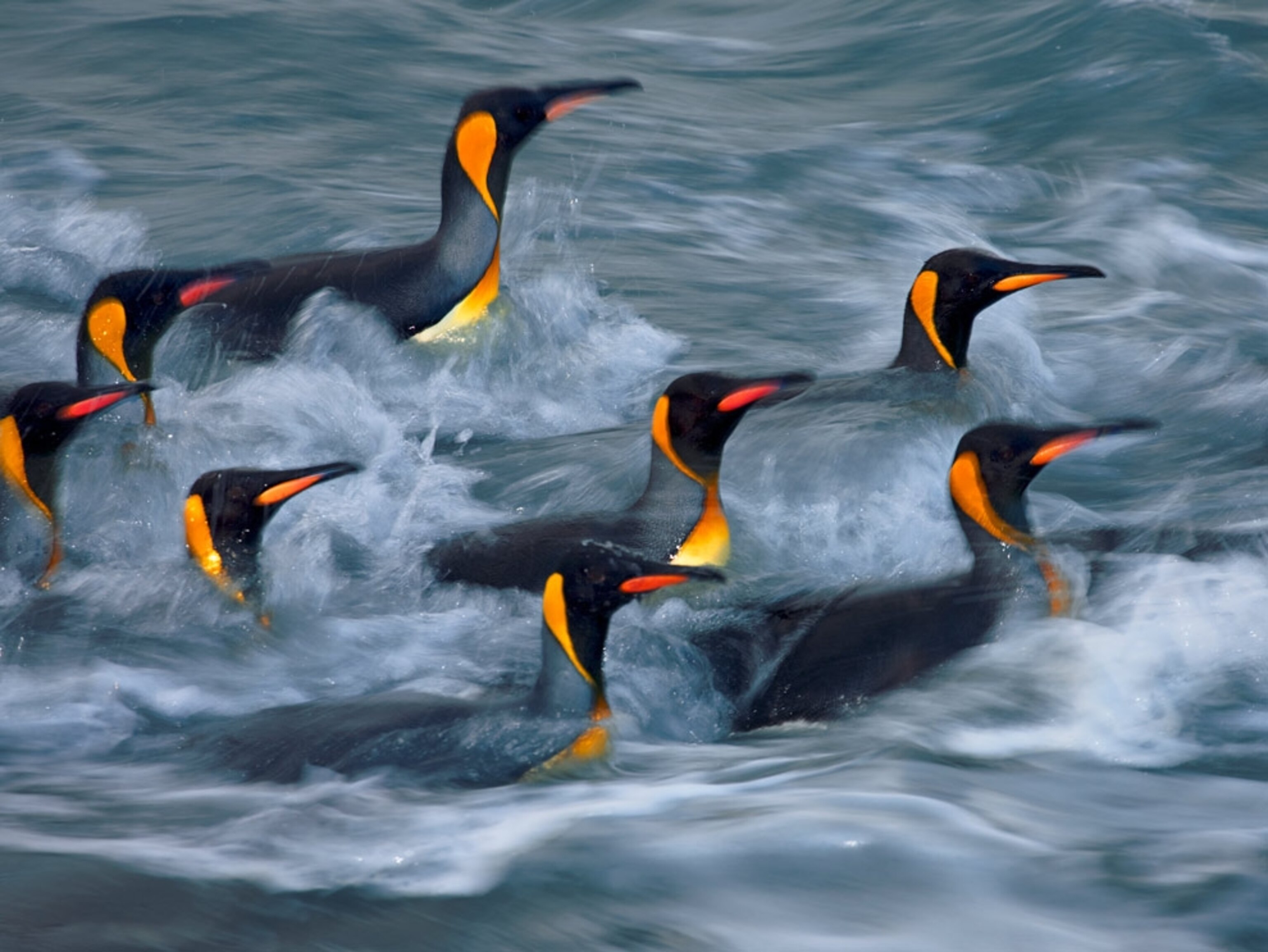
King Penguins, Gold Harbour
Photograph by Paul Nicklen
King penguins rinse in the surf zone of Gold Harbour on South Georgia. The island's king penguin populations are soaring. In 1925 only 1,100 kings were counted at St. Andrews Bay; since then there has been a 300-fold increase in the rookery.
-
Polar Bears, Svalbard
Photograph by Paul Nicklen
A female polar bear rejects the advances of a male in Svalbard. Their stark white coats provide camouflage in surrounding snow and ice. Under the fur is black skin—the better to soak in the sun's warming rays.
-
West Spitsbergen, Svalbard
Photograph by Paul Nicklen
From 15,000 feet (4,580 meters), Spitsbergen looks inhospitable. Whalers, scientists, and Arctic explorers have used Svalbard as a base, but only 2,500 call the islands home.
-
Young Polar Bear, Spitsbergen
Photograph by Paul Nicklen
A young polar bear carefully navigates a disintegrating ice pack off Spitsbergen, Svalbard. An abundance of seals keep Svalbard's polar bears fed, providing the energy necessary to keep the bears' massive bodies moving over a home range that can vary from 60 to 144,000 square miles (155 to 370,000 square kilometers).
-
Polar Bear Tracks, Svalbard
Photograph by Paul Nicklen
Huge footprints reveal a polar bear's path on Svalbard. Fur grows even on the bottom of a bear's paws, protecting against cold and providing a good grip on ice.
-
Polar Bear, Hornsund
Photograph by Paul Nicklen
Strong swimmer, a polar bear takes a dip in front of a Svalbard glacier. These Arctic giants are the masters of their environment and have no natural enemies.
-
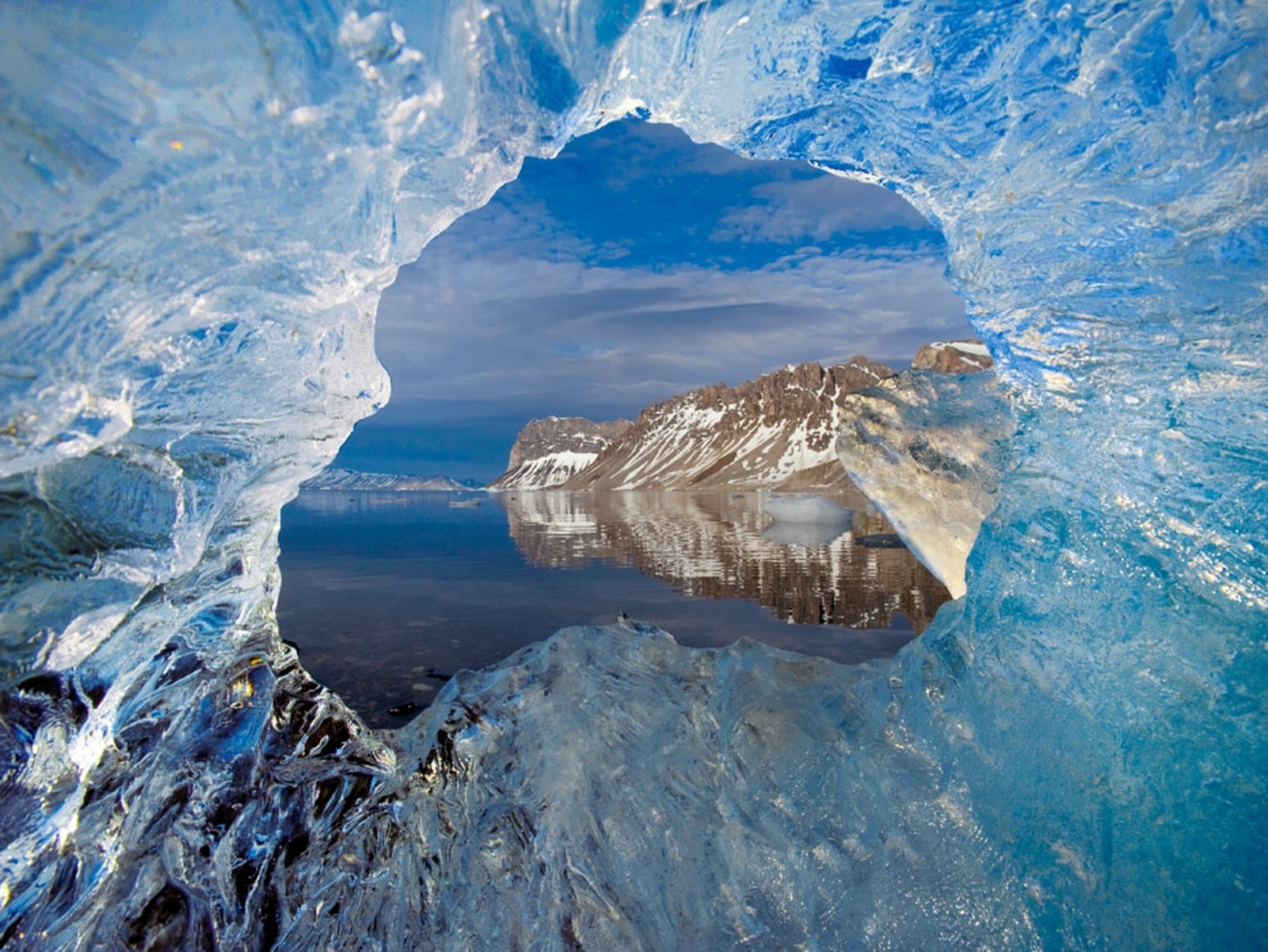
Hornsund, Spitsbergen
Photograph by Paul Nicklen
A hole in glacier ice frames Hornsund, Spitsbergen. Vikings may have found the far-flung islands of Svalbard as early as the 12th century.
-
Brünnich’s Guillemots, Bjørnøya
Photograph by Paul Nicklen
Brünnich’s guillemots line the shore at Bjørnøya, Svalbard. These stout seabirds breed here by the hundreds of thousands, most dispersing to Iceland or Greenland in winter.
Popular in Photography
Advertisement
-
Steady Hands and Fins
Photographer David Doubilet photographs stingrays, sharks, and more.
-
Survival Guide: Dodging Locusts
Swarm behaviorist Iain Couzin has a toxic reaction to a locust at the same time his team runs out of food.
Nat Geo Photo Workshops
Special Offers
-
National Geographic
Subscribe to National Geographic magazine and save. Print and digital editions available.