-
Pair of Stingrays
Photograph by David Doubilet
In a world of clouds and crystalline blue, a pair of stingrays glides just below the surface in the waters of French Polynesia's Tuamotu archipelago. The creatures find safe haven here under the protection of one of UNESCO's Man and Biosphere reserves.
-
Peacock Mantis Shrimp
Photograph by Tim Laman
The waters of Bali, Indonesia, are home to this otherworldly creature, a peacock mantis shrimp (Odontodactylus scyllarus). The shrimp feeds by smashing open its prey until it can feed on its tissue.
-
Galápagos Penguin
Photograph by David Doubilet
In an apparent moment of solitude and safety, a Galápagos penguin forages in the waters off the South American islands. But danger abounds for this small creature, whose population has been reduced to less than a thousand breeding pairs throughout the archipelago. Predators such as sharks and hawks kill the penguins. Temperature-driven food shortages starve adults. And human hazards—habitat disturbance and destruction, discarded waste from tourists and fishermen, and dangerous fishing nets—are pushing the creatures closer to extinction.
-
Flamingo Tongue Snail
Photograph by Wolcott Henry
A flamingo tongue sea snail (Cyphoma gibbosum) feeds from the top of a sea fan in the waters off Grand Turk Island. These predatory mollusks leave a noticeable trail of dead coral tissue in their wake.
-
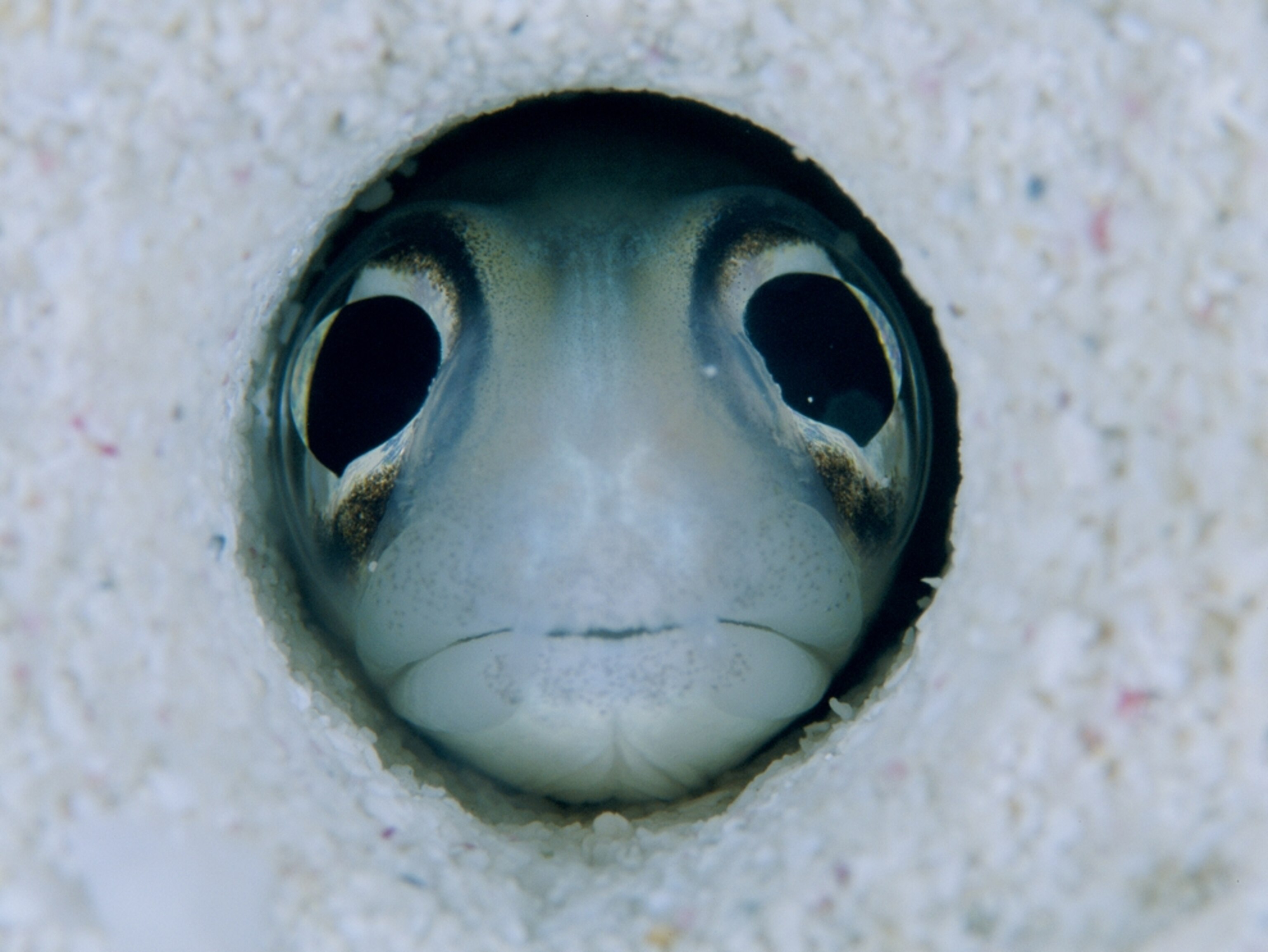
Conger Eel
Photograph by David Doubilet
Who's watching who? A conger eel (Ariosoma balearicum) peers out of its sandy burrow in Caribbean waters near Cuba. The elusive creature tends to hide during the day, emerging at night to feed.
-
Fish and Sponge
Photograph by David Doubilet
Captured by the photographer's flash, an unidentified fish takes center stage with a backdrop of a red vase sponge. Like other sponges, vase sponges feed on filtered nutrients drawn in with water through their pores.
-
Humboldt Squid
Photograph by Brian J. Skerry
Its sharp eyes trained on potential prey, a Humboldt squid (Dosidicus gigas) patrols the waters of Mexico's Gulf of California. At their largest, jumbo, or Humboldt, squid can reach six feet (two meters) long and weigh more than 100 pounds (45 kilograms). Scientists estimate that more than ten million squid live in a 25-square-mile (65-square-kilometer) area in the Gulf of California.
-
Foraging Squid
Photograph by David Doubilet
On the hunt for food in the waters of Japan's Izu Oceanic Park, a squid focuses its prominent eyes for prey. Although the squid has eight arms, it uses its longer tentacles to snare its catch, passing its meal to the arms, which then guide it into the mouth.
-
Crab and Sea Urchins
Photograph by George Grall
A colorful crab and sea urchins make for a psychedelic scene in Clallam Bay, Washington. Marine invertebrates, sea urchins use their spines to move along the seafloor, and crabs are known to be their natural predators.
-
Shark and Bubbles
Photograph by David Doubilet
A sensitive nose serves a silky shark (Carcharhinus falciformis) as it hunts for prey in the waters off southern Cuba. Electromagnetic sensors marked by pits on its snout help it detect even the slightest muscular movement in its prey, down to a heartbeat.
-
Camouflaged Shrimp and Crab
Photograph by Tim Laman
Look closely at this tapestry and you'll find an emperor shrimp and a crab on a sea cucumber. In this symbiotic relationship, seen here on Fiji's Rainbow Reef, the sea cucumber offers camouflaged protection (and possibly a ride) but is not harmed by its neighbors.
-
Nudibranch and Tunicate
Photograph by Tim Laman
Komodo National Park in Indonesia showcases a carnival of marine life, including this green-and-black nudibranch, seen here devouring a tunicate. The coloring of these carnivorous mollusks comes from the foods they eat.
-
Denise's Pygmy Seahorse
Photograph by David Doubilet
A Denise's pygmy seahorse (Hippocampus denise) takes its place among coral polyps in Indonesian waters. At less than an inch (2.5 centimeters) tall, the seahorse's size and coloration help camouflage it within the gorgonian coral.
-
Red Flatworm
Photograph by David Doubilet
Delicate as a flower petal, a marine flatworm glides along in the Pacific Ocean near Micronesia's Yap Islands. Its ruby color may be a protective measure, signaling potential predators that it is toxic.
-
Smooth Trunkfish
Photograph by Wolcott Henry
A smooth trunkfish (Lactophrys triqueter) swims through its coral habitat off Grand Turk Island in the Caribbean. Solitary in nature, the trunkfish blows water out of its mouth to expose prey such as mollusks, crustaceans, worms, and sponges.
-
School of Sweetlips
Photograph by David Doubilet
Moving as one, a school of sweetlips explores the waters of Australia's Great Barrier Reef. Sweetlips are often accompanied by the cleaner wrasse, a fish that grooms them and keeps their skin and mouths free of infection-causing parasites.
-
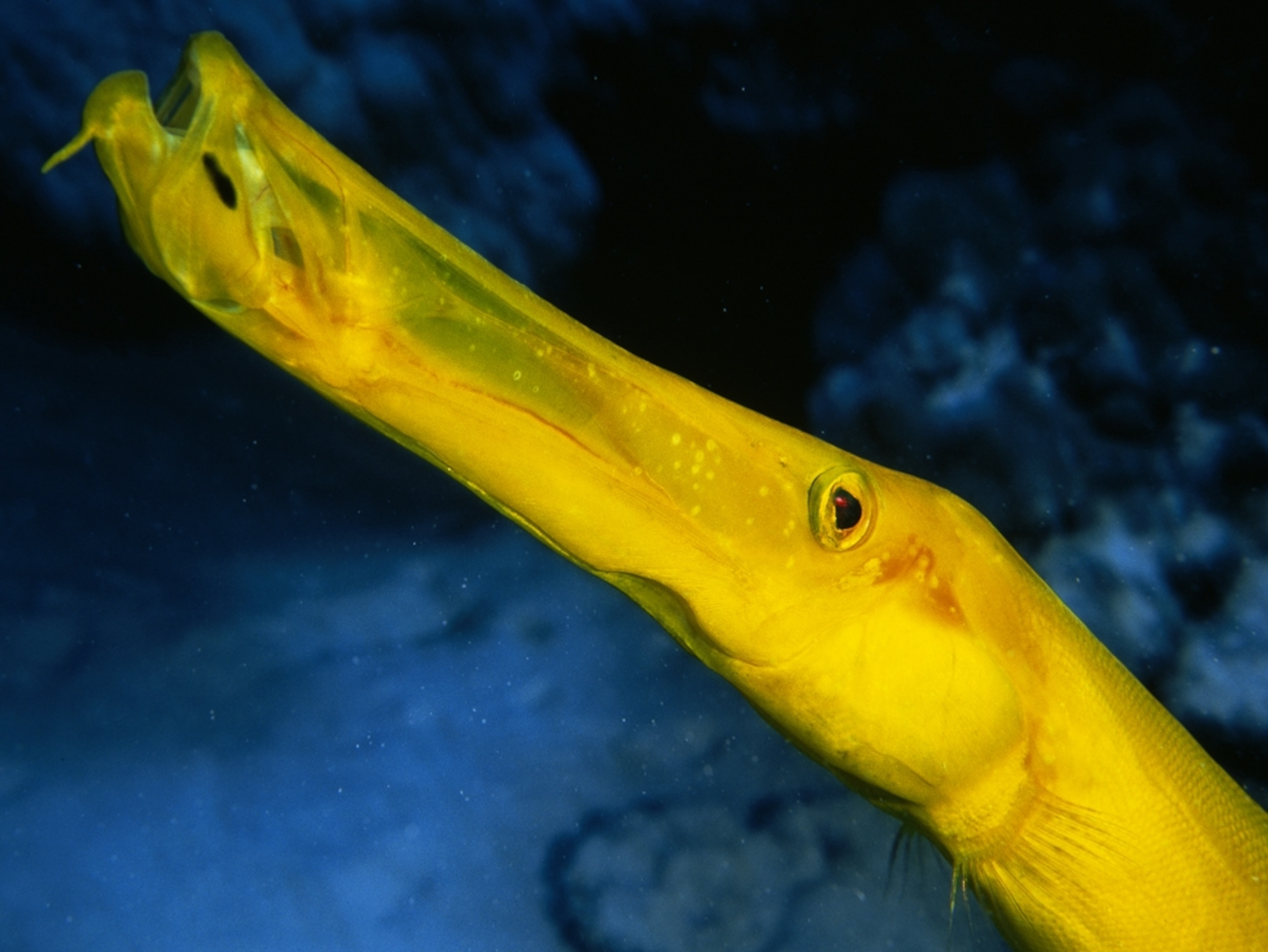
Yellow Trumpetfish
Photograph by David Doubilet
Holding the line of its near vertical posture, a yellow trumpetfish swims gracefully in the waters of the Tuamotu archipelago in French Polynesia. Trumpetfish tend to align themselves with other vertical objects, often hiding alongside larger upright-oriented fish to get closer to prey.
-
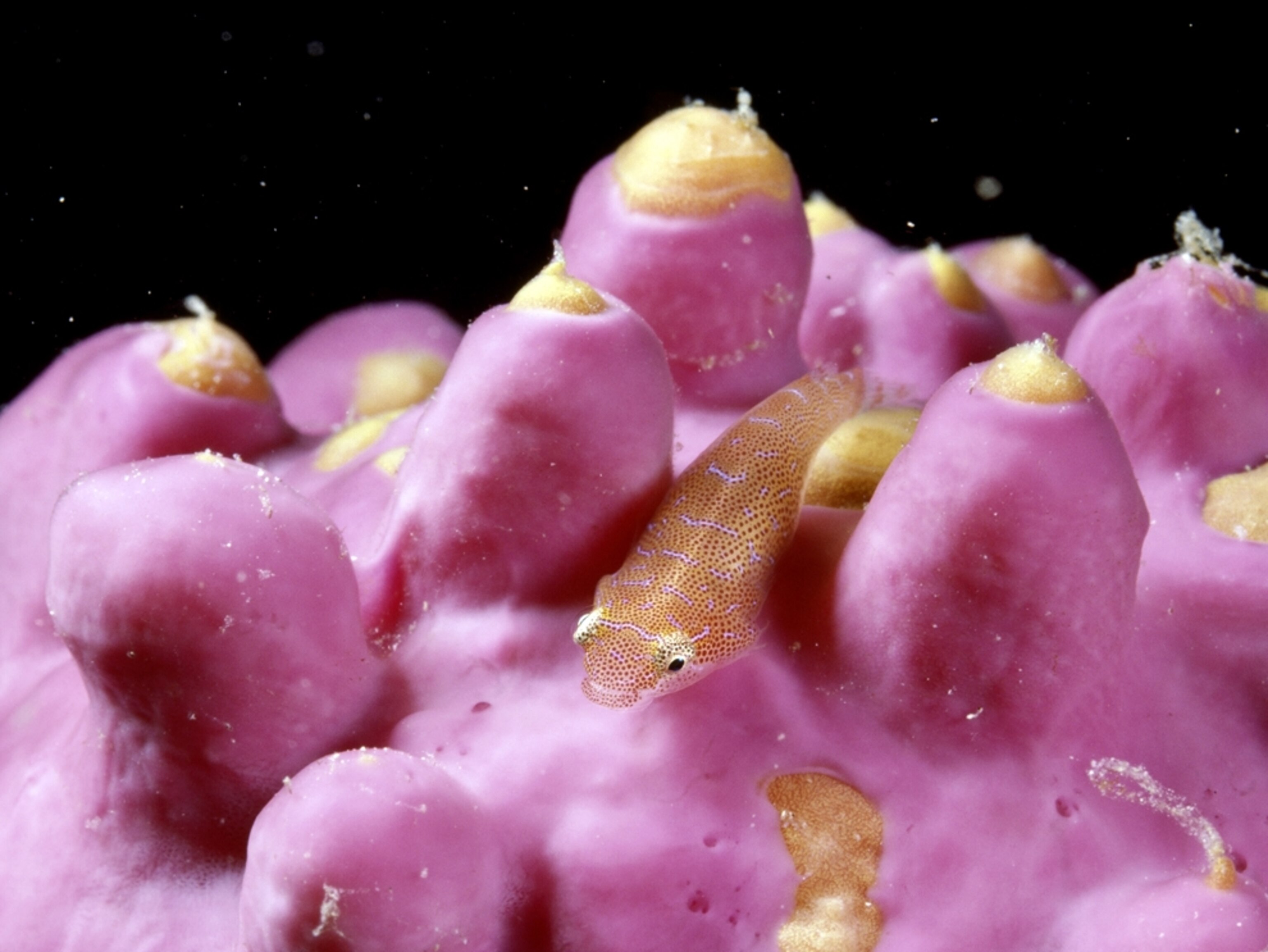
Sea Squirts and Clingfish
Photograph by David Doubilet
A colony of sea squirts forms a colorful landscape, ample hiding place for an Eastern cleaner-clingfish (Cochleoceps orientalis) in the Tasman Sea off the coast of Australia. The tiny fish, which cleans parasites from the bodies of larger fish, fights strong currents by anchoring itself with a sucker disc on its abdomen.
-
Red Sea Star
Photograph by David Doubilet
Stretched out in brilliant red, a sea star, or starfish, is one of the beauties among marine life in the Galápagos Islands. Sea stars not only have the ability to regenerate a body part that has been lost, but they can also self-amputate an appendage if they are injured or under attack.
-
Great White Shark
Photograph by David Doubilet
A great white shark (Carcharodon carcharias) plies the coastal waters of Gansbaai, South Africa. Great whites are protected in South African waters after being hunted for their jaws as trophies, killed for their fins for trade on the Asian fish market, and asphyxiated in gill nets.
Popular in Photography
Advertisement
-
Steady Hands and Fins
Photographer David Doubilet photographs stingrays, sharks, and more.
-
Survival Guide: Dodging Locusts
Swarm behaviorist Iain Couzin has a toxic reaction to a locust at the same time his team runs out of food.
Special Offers
-
National Geographic
Subscribe to National Geographic magazine and save. Print and digital editions available.